
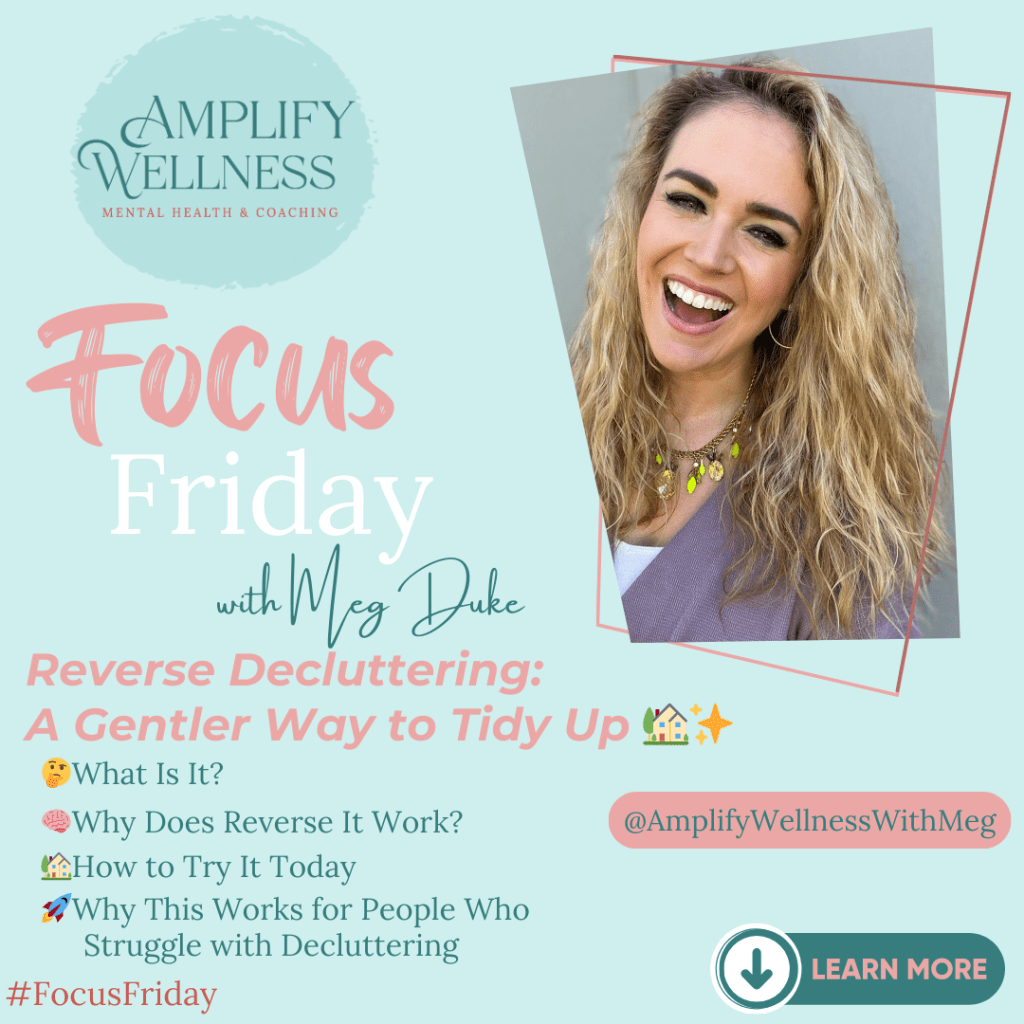
Have you ever started decluttering, only to feel paralyzed by decision fatigue? 😵💫 Maybe you pulled everything out of a closet, got overwhelmed halfway through, and walked away, leaving an even bigger mess. Or maybe the idea of deciding what to part with feels so daunting that you don’t even start.
If this sounds familiar, reverse decluttering might be the method for you. Instead of focusing on what to get rid of, this approach centers around what you actually want to keep—and for many people, that small shift makes all the difference.
What Is Reverse Decluttering? 🤔
Instead of standing in front of an overflowing drawer wondering what should go, reverse decluttering asks:
💡 What do I actually want to keep?
💡 What items do I use, love, and need?
💡 What things truly add value to my life?
Once you pull out the items that are definite keepers, what’s left is often stuff you don’t really need—making it so much easier to let go of.
Why Does Reverse Decluttering Work? 🧠
For many people (especially those with ADHD or executive function challenges), traditional decluttering is overwhelming because:
🛑 Decision fatigue – Choosing what to get rid of is mentally exhausting.
🛑 Emotional attachment – We feel guilty about getting rid of things.
🛑 Fear of regret – What if we need it later?!
🛑 The “too much, too fast” problem – Pulling everything out at once creates chaos.
Reverse decluttering reduces overwhelm by shifting the focus from loss to intentional selection—you’re not “getting rid of stuff,” you’re curating what you love. 🌟
How to Try Reverse Decluttering Today 🏡
Ready to give it a shot? Here’s how to do it:
1️⃣ Pick a Small, Low-Stress Area
Start with something manageable—a drawer, a shelf, or one section of a closet.
2️⃣ Choose What You LOVE & USE
Take out the essentials—the clothes you actually wear, the books you reread, the kitchen gadgets you use regularly.
3️⃣ Notice What’s Left Over
What’s still sitting there? Do you actually need it? Does it serve a purpose? If not, it’s easier to let go.
4️⃣ Give Yourself Permission to Keep or Let Go
You don’t have to toss everything immediately! A box labeled “Revisit Later” can help if you’re unsure.
5️⃣ Celebrate Small Wins! 🎉
Even if you only declutter one shelf today, that’s progress. Every small step makes a difference!
Why This Works for People Who Struggle with Decluttering 🚀
For those who feel decluttering is out of reach, reverse decluttering makes the process less overwhelming, more intentional, and way more achievable. Instead of asking “What should I remove?”, you’re asking:
💡 What do I truly want to keep?
This method works especially well if you’ve struggled with decluttering before or tend to get stuck in analysis paralysis.
So, if traditional decluttering methods haven’t worked for you, give reverse decluttering a shot this week! Start small, focus on what you truly want in your space, and see how it feels. 🌿
And if focus, organization, and ADHD-friendly strategies are things you want to work on, check out my FREE Navigating ADHD Mini Workbook! It’s packed with helpful tips to get started. 📖✨
 Amplify Wellness with Meg Duke