
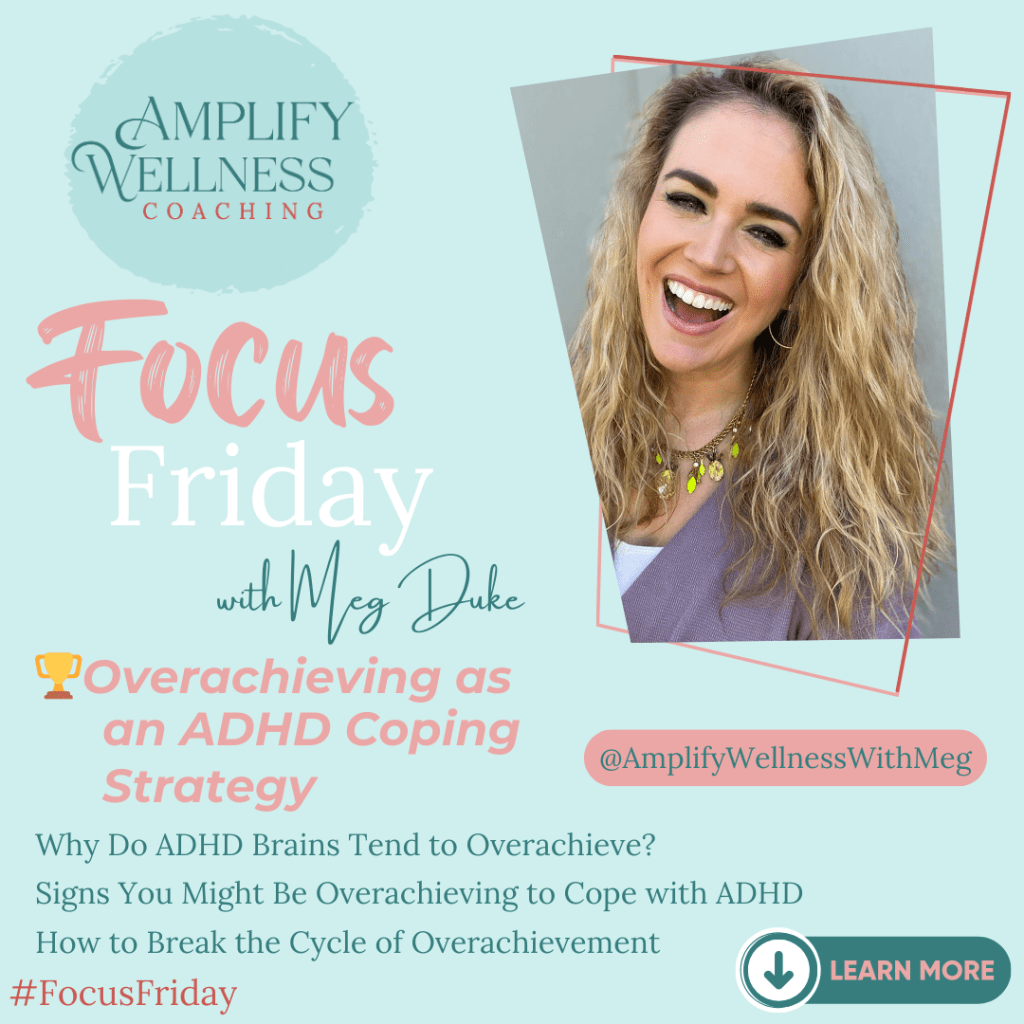
Do you thrive under pressure but secretly feel like you’re barely holding it together? Are you the person who volunteers for everything, juggles a million projects, and gets praised for being so productive—yet deep down, you’re exhausted? 😵💫
If this sounds familiar, you might be using overachievement as a way to navigate ADHD. 🧠✨
At first glance, it doesn’t seem like a bad thing, right? You get things done, people admire your work ethic, and you seem like you have it all figured out. But here’s the catch: it’s not sustainable. Overachieving can become a mask for deeper struggles with focus, impulsivity, or self-worth. Let’s talk about why this happens, how to recognize the patterns, and what to do about it.
Why Do ADHD Brains Tend to Overachieve?
For many people with ADHD, overachievement starts as a coping mechanism—sometimes without even realizing it. Here’s why:
🎯 Constant Need for Stimulation – Your brain craves excitement, and a packed schedule keeps you engaged. 📅
🎭 Masking ADHD Struggles – If you’re “successful,” people are less likely to notice you struggle with organization, memory, or follow-through.
🏆 Validation Seeking – ADHD can make self-worth feel shaky, so external praise becomes fuel to keep going.
😰 Fear of Failure – If you’re always going above and beyond, you don’t have time to fail—or so you hope.
⚡ Hyperfocus Mode – You can crush a task when you’re in the zone, but burnout follows when that focus fades.
For some, overachieving starts in childhood—being the “gifted” kid who seemed responsible but actually struggled behind the scenes. That’s why it can be helpful to ask a parent, teacher, or trusted adult about what they noticed when you were younger. They might give you insight into patterns you’ve carried into adulthood without realizing it.
Signs You Might Be Overachieving to Cope with ADHD
If you relate to more than a few of these, it might be time to reevaluate your relationship with achievement:
✅ You take on too many commitments because “busy” feels better than stillness.
✅ You thrive on tight deadlines but struggle with everyday consistency.
✅ You get anxious when you’re not being “productive.”
✅ You say yes to too many things because you fear disappointing others.
✅ You feel like you’re always behind, no matter how much you accomplish.
✅ You overcompensate for forgetfulness or procrastination by going overboard when you do get things done.
✅ You feel burnt out but keep pushing forward because slowing down feels worse.
How to Break the Cycle of Overachievement 🚦
Overachieving isn’t inherently bad—but when it’s fueled by ADHD struggles rather than healthy ambition, it can be draining. Here’s how to find balance:
1️⃣ Give Yourself Permission to Be “Good Enough”
Not everything has to be 10/10, gold star, best-of-the-best. 🏅 Some tasks just need to be done. Ask yourself:
🔹 Would this still be acceptable at 80% effort? (Spoiler: It probably would!)
🔹 Who am I trying to impress?
🔹 Does this actually need to be perfect, or is “done” better than “perfect” here?
2️⃣ Prioritize Rest as an Essential Task
Rest isn’t wasted time—it’s fuel. ⚡ If you struggle to slow down, schedule intentional breaks like you would a meeting. Some ADHD-friendly rest ideas:
🌱 Low-energy hobbies (puzzles, doodling, music)
📖 Read for fun (not self-improvement!)
💆 Nap without guilt (because burnout isn’t the goal)
3️⃣ Stop Saying “Yes” to Everything 🚦
Before committing to a new project, ask yourself:
🔹 Do I actually have time for this?
🔹 Will I resent this later?
🔹 Am I saying yes just for the dopamine hit?
It’s okay to say no—or even “not right now.” 🙅♀️
4️⃣ Make “Sustainable Success” Your Goal
ADHD can make consistency harder than intensity. Instead of burning bright and crashing, aim for steady progress:
✔️ Work in realistic time blocks (Pomodoro method, body doubling)
✔️ Automate & delegate where you can
✔️ Set limits on how much you take on
5️⃣ Ask Someone About Your Childhood Patterns 👶🧠
If this blog post is hitting home, it might be helpful to talk to a trusted adult—a parent, teacher, or older relative who knew you as a kid. Sometimes, the things we struggled with (or overcompensated for) as children shape how we navigate ADHD today. Their insights could help you understand why you developed these patterns—and how to break free from them.
You Are More Than Your Productivity 💛
Overachieving isn’t always bad, but if you’re constantly exhausted from proving your worth through success, it might be time to slow down. ADHD brains are brilliant, creative, and capable—but you deserve to feel good about yourself even when you’re not “achieving.” 💡
If this resonated with you, my FREE Navigating ADHD Mini Workbook has tools to help you understand your patterns and build systems that actually work for your brain. 💛
Have you noticed overachievement patterns in yourself? Drop a 💡 if this hit home!
 Amplify Wellness with Meg Duke