Focus Friday: Tips on How to Shut Down an Overactive Brain Before Sleep

Do you ever climb into bed exhausted, only to find your brain suddenly becomes the most talkative and energetic part of your body?

You’re not alone.
Especially for folks with ADHD or anxiety, bedtime can feel like the starting line for overthinking, planning, remembering, worrying, spiraling, daydreaming—or all of the above.

🌀 We call it “bedtime brain buzz.”

It’s not that you don’t want to sleep—your brain just doesn’t know how to transition. And for neurodivergent minds, transitions are rarely simple. But good news: sleep doesn’t have to feel like a fight.

Here are some helpful tools and shifts to try:


1. Set a “Landing Routine,” Not Just a Sleep Routine

Instead of jumping straight from stimulation (scrolling, cleaning, TV, etc.) into trying to sleep, create a 30- to 60-minute wind-down period. Think of it as a gentle descent. ✈️

Some examples:

  • Turn off bright overhead lights and switch to lamps or warm-toned lighting.
  • Light a candle or diffuse calming essential oils like lavender or bergamot.
  • Change into comfy clothes even before you’re ready to get into bed.

2. Offload the Brain Dump 📝

Your brain may be racing because it’s holding on to too many tabs. Try:

  • A “Night Notes” journal to write down any thoughts, to-dos, or worries.
  • Voice memos if writing feels like too much.
  • A physical notebook by your bed so your brain knows: “This is safe. We won’t forget.”

3. Try a Body-First Approach

Sometimes we can’t outthink our thinking—but we can out-sense it.

Try:

  • Progressive muscle relaxation (tense and release each body part slowly)
  • 4-7-8 breathing (inhale 4 sec, hold 7, exhale 8)
  • Weighted blankets, cozy socks, or light massage

These physical cues help tell your nervous system: it’s time to rest now.


4. Use a Calm but Focused Distraction

It’s okay if silence isn’t helpful. Instead of lying in the dark with your brain yelling, try:

  • A boring podcast or gentle sleep story
  • White or brown noise
  • A low-stakes audiobook (shoutout to old favorites—your brain already knows the plot!)

5. Be Gentle with Yourself 💗

Sometimes we don’t shut down so much as we slowly power down. It’s not a flaw.
It’s just how some brains work.

Offer yourself patience and experiment with what works for you.
Your brain isn’t bad—it just needs a little help switching gears.


P.S. If this sounds familiar, you’re exactly the kind of person my free “Navigating ADHD” mini workbook was made for. Whether you’re newly diagnosed or just looking to better understand your brain, it’s a great step forward. 🧠💫
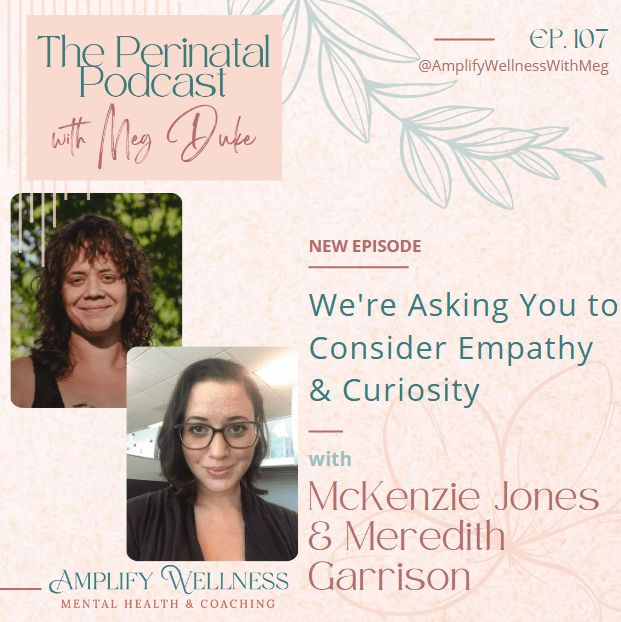
The Perinatal Podcast Ep. 107 – We’re Asking You to Consider Empathy & Curiosity

Welcome back to The Perinatal Podcast!

107 We’re Asking You to Consider Empathy & Curiosity, with McKenzie Jones and Meredith Garrison

🎙️ Welcome back to The Perinatal Podcast, Listener Darlings!

The alt title of this episode was, Chaos in its Most Beautiful Form. Today on The Perinatal Podcast, we go here, we go there, we go every very many which ways in spectacular fashion.

I’m joined this week by McKenzie Jones and Meredith Garrison—my very first sibling guests on the show! Together, we dive into a rich conversation about identity in motherhood, neurodivergence in both parenting and childhood, and the challenges of guiding our children through a world that doesn’t always celebrate creativity or support those who step outside the bounds of cultural norms.

We also reflect on Mother’s Day, exploring what it means to honor all identities and lived experiences. Throughout our chat, we invite you, our Listener Darlings, to embrace curiosity over judgment—to hold space for others, lead with empathy, and humanize the experiences of those around you. And maybe, just maybe, explore how you might let go of judgment altogether while still being intentional about protecting your own peace.

This is a heartfelt, thoughtful conversation—and I’m so glad to welcome you back to another episode of The Perinatal Podcast.

Get your FREE Navigating ADHD Mini Workbook Here!

Our Sponsors have some lovely deals for y’all!

Momanda
: Promo Code – PERINATAL

Essenther
: Promo Code: AMPLIFYWELLNESSWITHMEG

Needed
: Promo Code – PERINATALPODCAST

Muse
: Promo Code – AMPLIFY WELLNESS

I’m delighted to have you back, Listener Darling, here at The Perinatal Podcast!
Meg💫

Focus Friday: Mother’s Day Isn’t About Mom Guilt. It’s About You.

Let’s get something out of the way right now:
Mom Guilt isn’t real.

Parenting guilt? Absolutely.
We all raise our voices sometimes. We act outside of our core values. We replay moments that didn’t sit right and think, I want to do that differently next time. That kind of guilt has a purpose—it’s a compass. It points us back to the kind of parent we want to be.

But Mom Guilt?
That’s an external message, not an internal truth.

Mom Guilt was manufactured by a culture that wants to keep women overfunctioning, over-apologizing, and overextending. It’s rooted in the idea that no matter what you do, it won’t be enough—unless you’re giving every last bit of yourself away.

Let’s release that. This Mother’s Day, and every day after.


You’re Allowed to Make It Your Own

Last year, a fellow parent and I went to Hamburger Mary’s for a drag show on Mother’s Day. It was loud, sparkly, joy-filled, and exactly how I wanted to spend the day. 🌈💃

Later on that rainy day, I snuggled up on the couch with my kids and soaked up their fabulous tiny human energy. That felt good too.

And that duality? That’s the point.

If we’re fine with a dad heading out to the golf course or taking the whole day off to “just do his thing” on Father’s Day, why do we balk when a mother wants to spend a few hours away, fully in herself?

You don’t stop being a parent when you pause for joy, rest, silliness, quiet, community, or champagne at brunch. You just remind yourself that you’re a person—and that person is worthy of celebration too.


To My Queer, Trans, and Non-Binary Parenting Siblings

This weekend may or may not reflect your identity or your role. You might be a parent who doesn’t align with “Mother” or “Father,” or who fits both or neither.

You might be in a two-mom household. Or co-parenting in a queerplatonic dynamic. Or holding space for kids who’ve chosen you as family outside of biology or legality.

If this day is meant to celebrate care, labor, and love—then it’s for you too.
Claim it. Or don’t. Make it yours, or ignore it altogether. There’s no one way to be a parent. There never was.


To Everyone Wanting to Celebrate a Mother or Parent This Sunday…

If you’re thinking: I want to honor her, them, him—amazing.

Now here’s the gentle encouragement: Don’t make them do the work.

  • Don’t ask, “What should we do?”
  • Don’t make them herd the group text.
  • Don’t default to, “Well, let me know what you want and I’ll make it happen.”

Just do it.
Pick up the phone. Make the plans. Book the reservation. Order the groceries. Find out what feels good to them—and then make it happen without a follow-up committee meeting.

Want to give the best gift this year?
Try reducing the mental load. 🧠
Ease some decision fatigue.
Take a little emotional labor off their plate.

And then ask yourself: How can I do this the other 364 days a year too?


This weekend, and always, I’m holding space for you—whatever your role, your longing, your exhaustion, your celebration, your grief, your queer joy, your gentle ache, your tender wins, and your fierce love.

You’re enough. Without guilt. Without apology. And you deserve a day that feels like yours.

Sending my love,
Momma Meg

New Episode! The Mini Episodes – Ep. 12

Welcome to the Mini Episodes!

I’ve received so many wonderful comments and stories from you all over the years, and I think it’s time to share them on the show! It’s incredibly validating to hear from others and realize we’re not alone on our mental health journeys. Plus, your insights and tips for making improvements in your lives are truly inspiring.

If you’d like to share your story, send your email to me at Meg@MegDukeLCSW.com. And if you’re feeling up for it, you can even send a voice memo!

Welcome back to The Perinatal Podcast – The Mini Episodes!

Get your FREE Navigating ADHD Mini Workbook Here!
https://lnkd.in/gQ59rnaK

Thank you to today’s show sponsors!
@momandaofficial Promo Code: PERINATAL
@essenther.official Promo Code: AMPLIFYWELLNESSWITHMEG
@needed Promo Code: PERINATALPODCAST
@choosemuse Promo Code: AMPLIFY WELLNESS

Thanks so much for joining me for this episode of The Perinatal Podcast – The Mini Episodes. I’d love for you to write a review of my show on your app, and don’t forget to subscribe so you get a notification when new content is posted. Take a moment to leave a 5-star rating, too!

You can access additional mental wellness content and ad-free episodes by purchasing a monthly subscription at ⁠https://podcasters.spotify.com/pod/show/theperinatalpodcast/subscribe⁠ or ⁠https://podcasts.apple.com/us/podcast/the-perinatal-podcast/id1590957531⁠.

Follow me at @AmplifyWellnessWithMeg on Instagram and find Meg Duke LCSW on Facebook. You can also look for The Perinatal Podcast content by searching the hashtag, hashtag#ThePerinatalPodcast.

Focus Friday: Thriving in Neurotypical Workspaces with a Neurodivergent Mind 🧠🏢

Let’s be honest: many corporate and agency environments weren’t built with neurodivergent people in mind.

From rigid 9–5 structures ⏰ to endless meetings 📅 and one-size-fits-all productivity models 📊, these spaces often reflect a neurotypical worldview—prioritizing consistency, multi-tasking, verbal communication, and rapid processing.

So what happens when your brain works differently?

You might feel…

  • Constantly behind or disorganized, even when you’re working hard
  • Exhausted from masking and performing “professionalism”
  • Overwhelmed by open-office environments or unclear expectations
  • Misunderstood by supervisors who interpret neurodivergent traits as “lazy,” “unfocused,” or “emotional”

Here’s the truth: your brain isn’t broken. The system is narrow.


🧭 Step One: Name What You’re Navigating

You can’t change what you can’t name.

Start by noticing patterns—especially ones that leave you drained, anxious, or second-guessing yourself.

Here are a few common neurotypical-centered dynamics to watch for:

  • Rigid scheduling with no flexibility for energy shifts
  • Meetings with unclear goals or rapid-fire agendas
  • Unwritten rules about communication (e.g., “We expect immediate email replies”)
  • Assumptions that multitasking = productivity
  • Performance reviews based on “consistency” rather than impact or innovation

Once you spot the patterns, you can shift from self-blame to self-understanding—and begin the work of adaptation.


📣 Step Two: Advocate with Clarity and Confidence

You don’t have to disclose your diagnosis to advocate for your needs (though it’s totally okay if you do!). You can simply describe what helps you do your best work.

Here are some powerful scripts and strategies:

🗣️ “I work best when I can see agendas ahead of time—can we make that a team habit?”
🗣️ “Would it be possible to follow up big conversations in writing? It helps me process more clearly.”
🗣️ “Back-to-back meetings drain me—I do my best work with recovery time in between.”
🗣️ “I’m experimenting with productivity tools to support focus. I’d love to share what’s working for me soon.”

You’re not asking for special treatment. You’re requesting clarity, structure, and support—things that benefit everyone, not just neurodivergent folks.


🛠️ Step Three: Make Small, Sustainable Shifts

Sometimes, you can’t change the system—but you can change your strategies within it.

Here are a few adjustments that have helped neurodivergent clients thrive in traditional spaces:

✅ Using noise-canceling headphones or body-doubling tools
✅ Time-blocking in short sprints (à la Pomodoro-style work bursts 🍅)
✅ Creating “buffer zones” before and after meetings
✅ Writing out verbal instructions to solidify understanding
✅ Asking for priorities in writing to reduce task overwhelm
✅ Setting up visual cues or color-coded calendars to manage transitions

The goal isn’t to become a productivity robot. It’s to create enough structure and support so your brain can do its best work without burning out.


💡 Step Four: Invite Change, Even in Small Ways

Whether you’re a team member, a manager, or a freelancer—your voice matters.

Normalize asking questions like:

  • “Can we have more asynchronous communication options?”
  • “What tools can support different learning and processing styles?”
  • “How do we evaluate performance beyond presence or personality?”

By naming what’s not working—and modeling curiosity instead of criticism—you become part of the culture shift that makes room for neurodiversity to thrive.


🌈 Final Thought: You Deserve to Belong Here

You weren’t “too sensitive” for that job.
You didn’t fail because you needed reminders.
You weren’t unprofessional because you stimmed in your chair or needed to take breaks to reset.

You are a different kind of thinker in a world that’s just starting to learn how to listen.

Be kind to yourself. Stay curious. Find your rhythm.

And if you’re ready for more tools to support your beautiful, brilliant brain—download my free Navigating ADHD Mini Workbook. It’s full of supportive prompts, clarity tools, and real-world strategies for moving through life (and work!) with intention.

You’re not the problem. You’re part of the solution. 💛

#FocusFriday #NeurodivergentAtWork #ADHDAwareness #NeurodivergentProfessional #CorporateCultureShift #MaskingIsExhausting #ThrivingNotJustSurviving #MentalWellnessAtWork #YouDeserveSupport #AmplifyWellness #ChaoticAndTwirly

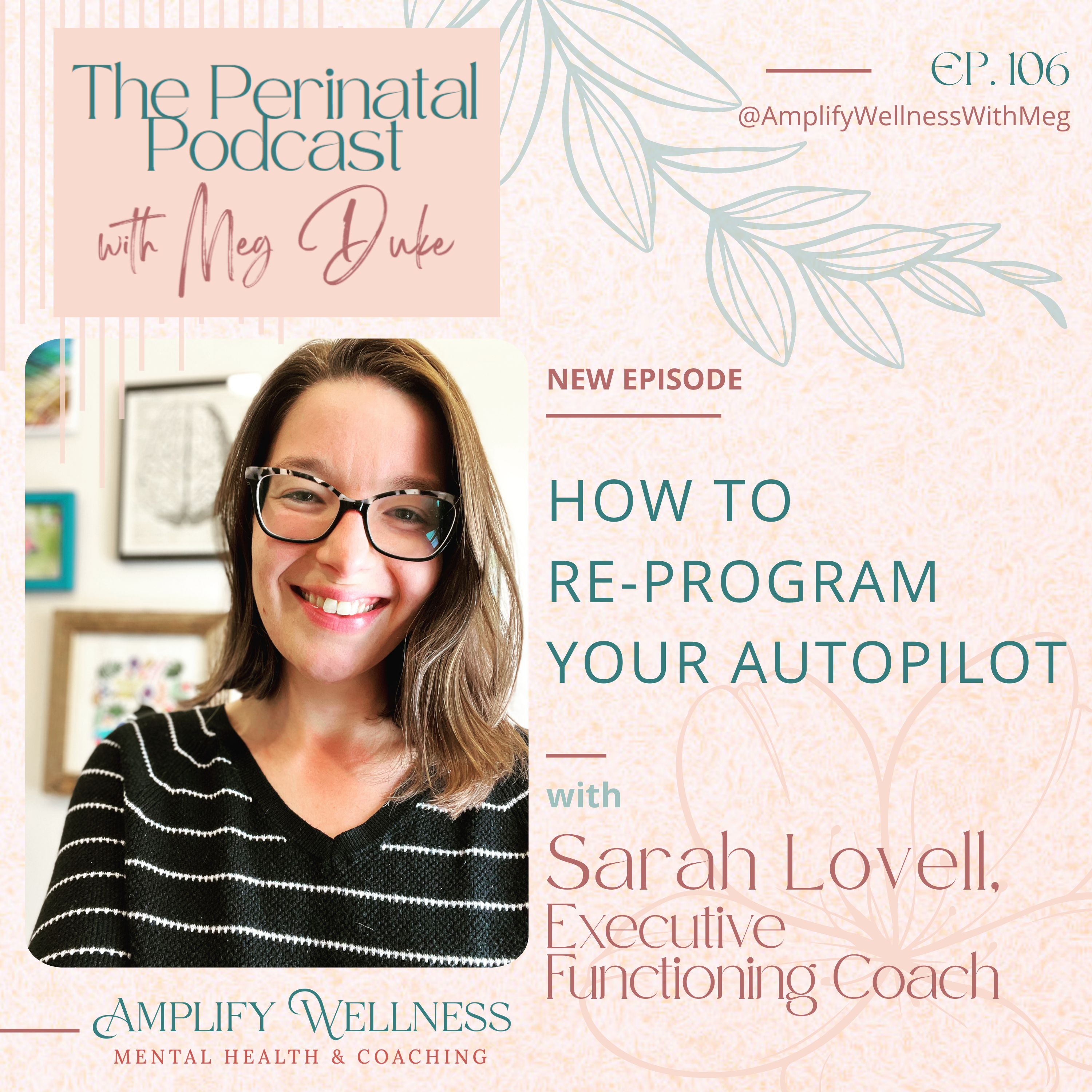
The Perinatal Podcast Ep. 106 How To Re-Program Your Autopilot💫

#ThePerinatalPodcast Ep. 106 How To Re-Program Your Autopilot💫

🎙️ Welcome back to The Perinatal Podcast, Listener Darlings!

Today, we’re diving into the real-life tug-of-war between being productive and finding peace — and why giving yourself permission to slow down might just be the most powerful move you make this week.

We’ll talk about the ways social interactions and self-talk are secretly running the show when it comes to executive functioning (spoiler: your inner voice matters a lot). Plus, we’ll explore activation discomfort, why it feels so hard to get started sometimes — and the sweet sense of relief that can follow when you push through.

Ever wonder if you should say “I’m sorry” or maybe… “thank you” instead? We’ll unpack that too, along with how to reprogram your autopilot behaviors, why stages of change are not a straight line, and the magic that happens when you replace all-or-nothing thinking with a mix of structure and flexibility.

Oh, and yes — we’re definitely going to talk about doom scrolling (because we’ve all been there).

Grab your tea, your cozy socks, or your walking shoes — let’s get into it!

@executivefunctioningfirst#AmplifyWellness#ADHDcoach#ExecutiveFunctioningCoach#ChaoticAndTwirly#adhdautopilot

Get your FREE Navigating ADHD Mini Workbook Here!
https://subscribepage.io/ADHDMiniWorkbook

Thank you to today’s show sponsors!
@momandaofficial Promo Code: PERINATAL
@essenther.official Promo Code: AMPLIFYWELLNESSWITHMEG
@needed Promo Code: PERINATALPODCAST
@choosemuse Promo Code: AMPLIFY WELLNESS

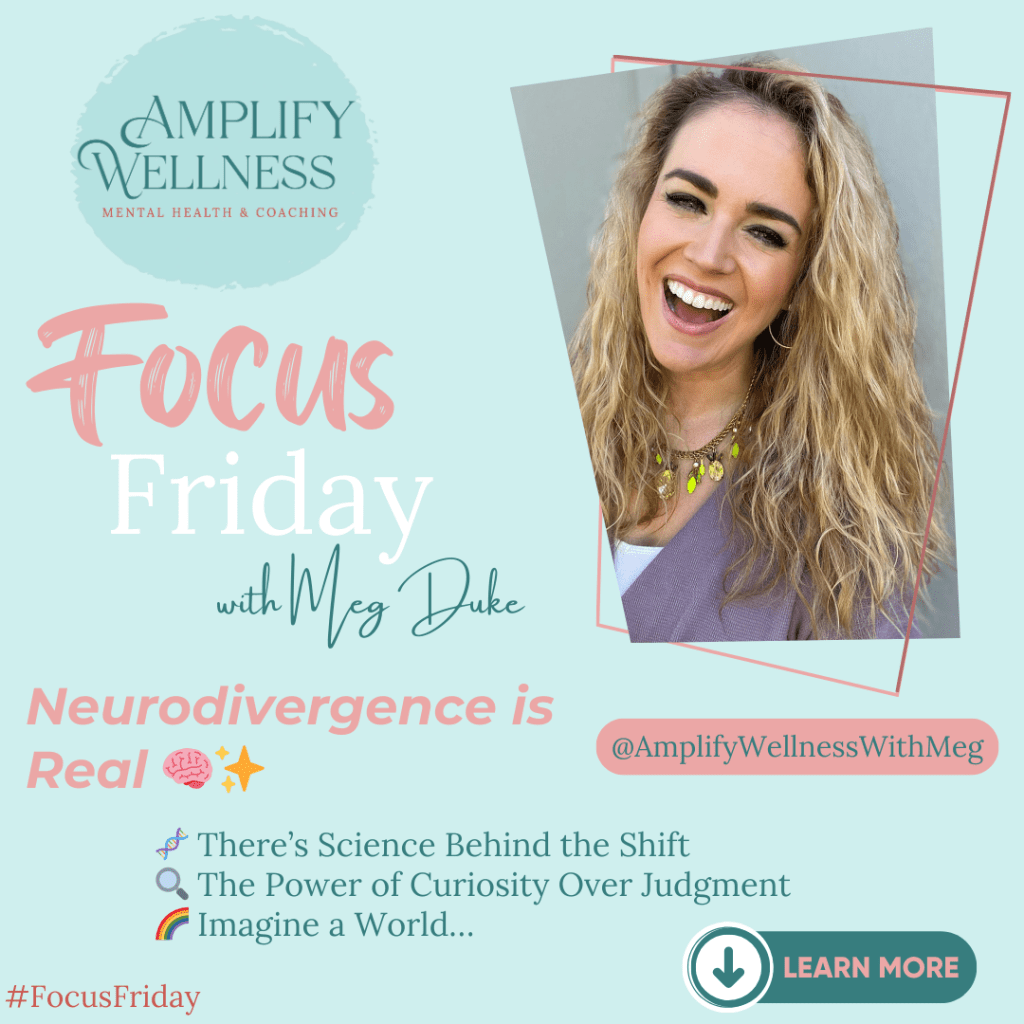
Focus Friday: Neurodivergence is Real 🧠✨

Let’s start here:
You’re not imagining it.
You’re not broken.
And you’re not “just being dramatic.”

The increase in neurodivergent diagnoses—ADHD, autism, learning differences, and more—isn’t because everyone suddenly wants a label. It’s because we are finally, finally understanding the real neurological, developmental, and biological factors at play.

We’re growing in awareness. We’re unlearning the myths. And we’re making space for neurodivergent experiences to be named, known, and supported.


🧬 There’s Science Behind the Shift

Diagnosis rates are rising not because of over-diagnosis or fads, but because:

🔬 We have better tools and understanding than even a decade ago
👶 We know more about how neurodevelopment unfolds across a lifespan
📚 We’ve researched the long-term impact of masking and missed diagnoses
💡 We’re listening to people—especially women, BIPOC folks, and LGBTQ+ folks—who were long overlooked

Neurodivergence has always existed. But for generations, it was shamed, punished, or ignored.
Many people had to mask—hide their traits, exhaust themselves trying to “fit in,” and internalize the idea that something was wrong with them for not thriving in systems that weren’t built with them in mind.


🔍 The Power of Curiosity Over Judgment

What if we allowed ourselves to be curious instead of critical?

What if we believed that brains work differently—and that differences don’t mean deficits?

What if we made room in our workplaces, classrooms, communities, and relationships for the whole range of human minds?

The world has tried the “one right way” approach. The one-size-fits-all model. And spoiler alert: it didn’t fit many of us.

We have a chance now to do better.


🌈 Imagine a World…

… where people don’t have to burn out to belong.
… where we honor multiple learning styles, processing speeds, and sensory needs.
… where we stop labeling people “lazy” or “weird” and start asking, What support do you need to thrive?

The future isn’t about forcing everyone into the neurotypical mold. It’s about building flexible, inclusive, human-centered systems—where neurodivergent folks don’t just survive but flourish. 🌻


So if you’ve ever thought:

🧠 “Maybe I’m not just bad at this…”
💬 “Why do I have to work twice (3x, 4x, 5x…) as hard?”
🫣 “Why does this feel easier for everyone else?”
✨ “Could my brain just… work differently?”

You’re not alone. You’re not making it up.
And you deserve to explore that truth with compassion and curiosity.


💛 P.S. My free Navigating ADHD Mini Workbook is a gentle entry point if you’re starting to unpack your neurodivergent experience or want to better understand your focus patterns. It’s totally free—and created to support twirly, chaotic, beautiful brains like yours. 🎁

#FocusFriday #NeurodivergentIsValid #ADHDAwareness #AutismAcceptance #UnmaskingJourney #NeurodivergentVoices #MentalHealthMatters #YouAreNotBroken #AmplifyWellness

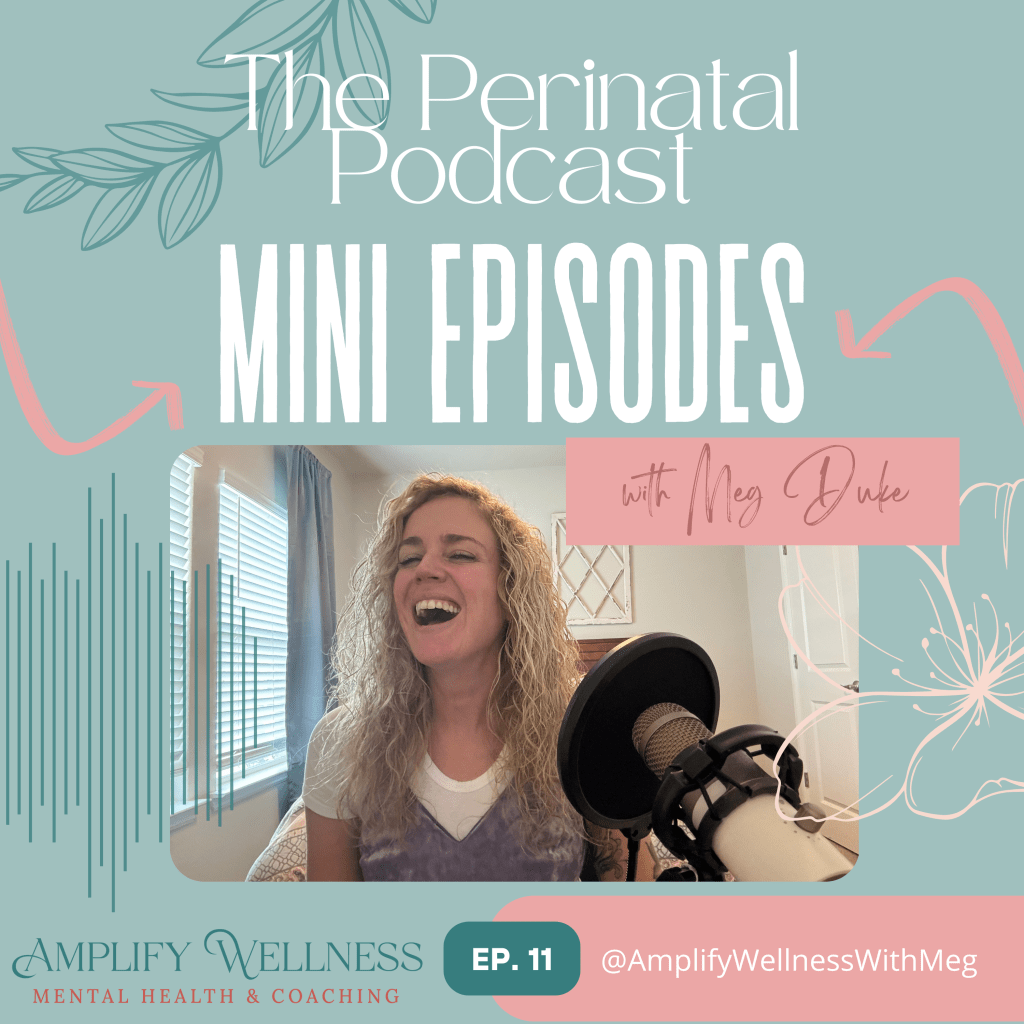
New Episode! The Mini Episodes – Ep. 11

WE HAVE OUR FIRST VOICE NOTE!!!

One of you Listener Darlings was kind and brave enough to not only send in your story but to record yourself in your own voice! I’m delighted and elated to share these stories in any form, and also, YAY!

Welcome to the Mini Episodes!

I’ve received so many wonderful comments and stories from you all over the years, and I think it’s time to share them on the show! It’s incredibly validating to hear from others and realize we’re not alone on our mental health journeys. Plus, your insights and tips for making improvements in your lives are truly inspiring.

If you’d like to share your story, send your email to me at Meg@MegDukeLCSW.com. And if you’re feeling up for it, you can even send a voice memo!

Welcome back to The Perinatal Podcast – The Mini Episodes!

Get your FREE Navigating ADHD Mini Workbook Here!
https://subscribepage.io/ADHDMiniWorkbook

Thank you to today’s show sponsors!
@momandaofficial Promo Code: PERINATAL
@essenther.official Promo Code: AMPLIFYWELLNESSWITHMEG
@needed Promo Code: PERINATALPODCAST
@choosemuse Promo Code: AMPLIFY WELLNESS

Thanks so much for joining me for this episode of The Perinatal Podcast – The Mini Episodes!

#theperinatalpodcast#amplifywellness#voicenote#sharedexperiences#chaoticandtwirly#monotasking

Focus Friday: The Weight of Micro Rejections 🧠💔

If you’ve ever walked away from a seemingly small moment—an unanswered text, a lukewarm “ok,” a joke no one laughed at—and felt disproportionately rattled or rejected…

You’re not alone.
You may be experiencing what we call micro rejections—and if you’re someone with ADHD, you may be especially sensitive to them.


🤏 What Are Micro Rejections?

Micro rejections are small, subtle moments of perceived rejection—they may not seem like a big deal from the outside, but they land deeply and sharply, especially for those of us who are already navigating heightened emotional sensitivity or rejection sensitivity dysphoria (RSD).

Think:

  • A friend takes hours to reply to your message 📱
  • Someone doesn’t laugh at your joke 😶
  • You’re left out of a group text or event 💬
  • A colleague gives short feedback with no warmth 🧊

These micro moments get tallied up, often subconsciously, and the message we start to absorb is:

“I’m too much.”
“I said the wrong thing again.”
“People don’t really like me.”
“I’m always messing this up.”


🧠 ADHD and the Impact of Micro Rejections

People with ADHD often carry a history of correction, criticism, or being misunderstood.
When your brain processes things differently, you may hear more of:

  • “Why are you always interrupting?”
  • “You need to try harder.”
  • “You’re so disorganized.”
  • “What’s wrong with you?”

Over time, that messaging becomes part of your inner narrative. So when a micro rejection pops up, it taps into all those past wounds. You may know logically that one unanswered text doesn’t equal abandonment—but your nervous system doesn’t always know that.

These tiny moments compound, leaving a person feeling overly self-critical, anxious, or shut down. And often? You start to reject yourself before someone else can do it first.


🧰 What Can You Do About It?

🌱 Name It
Sometimes just labeling what’s happening—”Oh, this is a micro rejection moment”—can reduce its power.

💛 Reality Check
Ask yourself: What else could be true here?
Is your friend busy? Is your coworker distracted? Could it have nothing to do with you?

🧠 Build the Inner Voice You Needed
Replace the inner critic with a compassionate internal narrator.
Instead of “I’m too much,” try “I care deeply and that’s beautiful.”

📣 Talk About It
The shame around micro rejections shrinks when we speak them out loud. You’re not needy or dramatic—you’re human.

👥 Regulate + Reconnect
Come back to safe, affirming people who see you. Regulate your nervous system through breath, grounding, movement, or rest.


💌 You’re Not Too Much

Let’s name these little hurts, not to amplify them, but to better understand the emotional landscape so many folks with ADHD are walking through.

You’re not overreacting. You’re responding to years of internalized rejection—and it’s time to rewrite the story. 💫


P.S. If this resonates, grab my free Navigating ADHD Mini Workbook—designed to help you work with your brain instead of against it. 🎁

The Perinatal Podcast – S7:E13 Rupture and Repair: Closing the Loop in Relationships with Neurodivergence | Ashley Marie Eckstein, LMFT

Welcome back to The Perinatal Podcast!

This week, I’m joined by Ashley Marie Eckstein, licensed marriage and family therapist who went all the way to Switzerland, and beyond, to train in Emotionally-Focused Therapy and neurodivergence.

We discuss the importance of naming and claiming neurodivergence, whether one or both partners have it, avoiding mind reading and assumptions, and how Ashley Marie helps her clients recognize the patterns of The Negative Cycle and how to navigate it with intention.

I’m delighted to have you back, Listener Darling, here at The Perinatal Podcast!

@eft_with_ashley_marie#couplestherapy#neurodivergentcouples#amplifywellness#chaoticandtwirly#theperinatalpodcast

Thanks to this week’s sponsors!

@momandaofficial Promo Code: PERINATAL
@essenther.official Promo Code: AMPLIFYWELLNESSWITHMEG
@needed Promo Code: PERINATALPODCAST
@choosemuse Promo Code: AMPLIFY WELLNESS