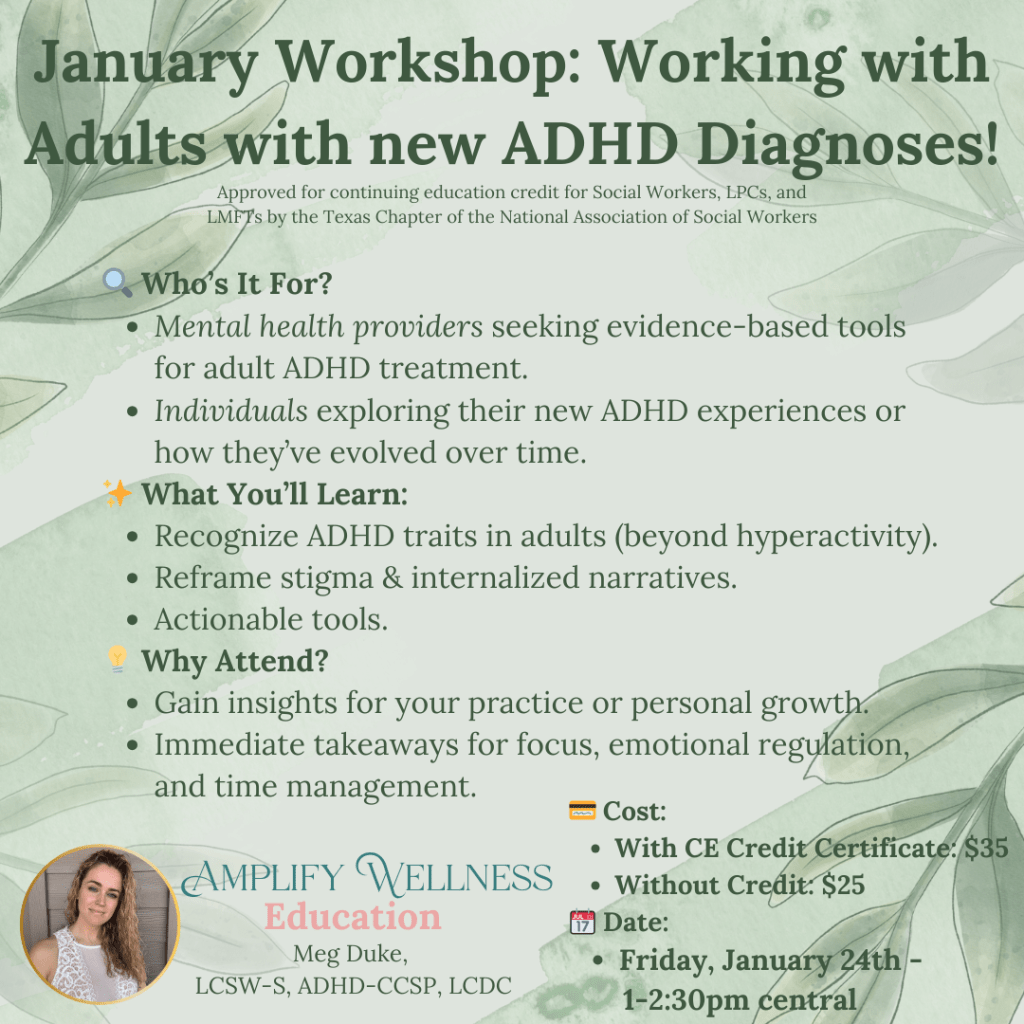
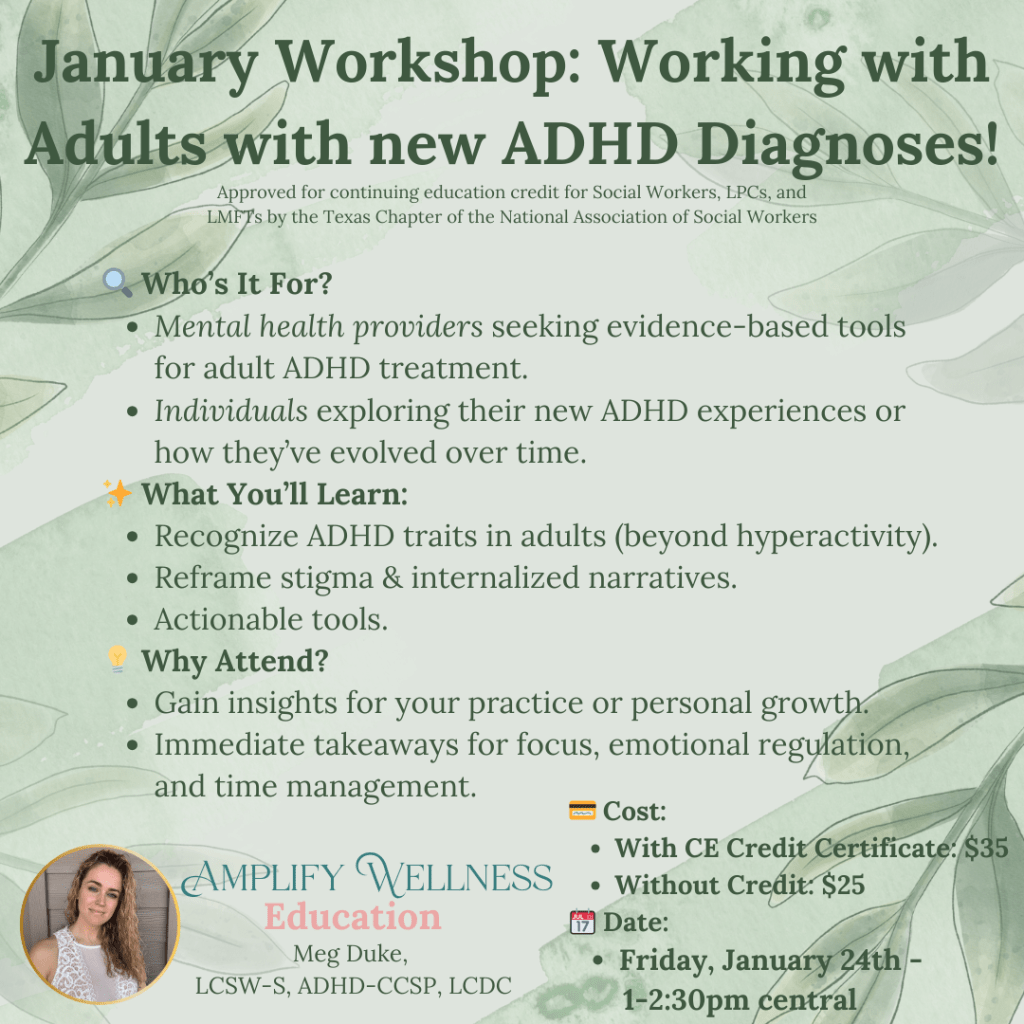
The Perinatal Podcast – Mini Episode 5 – THE Adults with ADHD Workshop!

January 24th – 1-2:30pm central!

Want to learn about navigating your Adult ADHD? Are you a provider who could brush up on your skills in working with your neurodivergent clients? I’ve got the workshop for you!

Welcome back to The Perinatal Podcast, The Mini Episodes! And be sure to subscribe for notifications – we have our 100th Episode coming to you next month!

Mini Episode 5 – Today, I’m celebrating a career achievement + giving you the details on my Adult ADHD workshop, being held next week! I’ve long wanted to be a continuing education provider, and this past December, I was approved by NASW (National Association of Social Workers) Texas to share my experiences and knowledge with each of you!

Whether you’re a provider seeking CE credit or a person hoping to learn more about navigating your own neurodivergence, I’ve got a link for you below.

Can’t wait to see you there!

Stay focused, stay fabulous!
Meg 💫

Focus Friday: Reflecting on 2024

As we close the chapter on 2024, I want to take a moment to express my heartfelt gratitude to each of you who’ve been part of this year’s journey. Whether you joined an accountability group, read a blog post, listened to The Perinatal Podcast, or simply followed along quietly, your presence and energy have mattered deeply. Thank you for showing up in whatever way you could—for yourself, for others, and for this community.

This time of year, it can be easy to get caught up in grand resolutions and lofty goals for the year ahead. But today, I want to invite you to pause and reflect on the small victories and the small steps you’ve taken over the past year. Those little moments of progress often hold more power than we realize.

Did you get through a tough day with kindness for yourself? Did you take a deep breath instead of reacting in frustration? Did you make a choice—big or small—that aligned with the person you’re becoming? Those moments are worth celebrating. Each small step adds up, laying the foundation for growth and change.

Let’s also take a moment to honor the challenges and the spaces where things didn’t go as planned. Maybe there were goals you set but didn’t reach. Maybe there were moments where you fell short or felt stuck. Those moments matter, too. They’re not failures—they’re evidence that you’re trying, learning, and growing. Let’s celebrate the courage it takes to try, even when we stumble. Growth often happens in those uncomfortable, imperfect spaces.

And while we’re reflecting, let’s hold space for the hurts—the losses, disappointments, or griefs of the year. Those experiences shape us as well. It’s okay to feel their weight, and it’s okay to acknowledge the ways they’ve changed us. Gratitude doesn’t mean bypassing those hard moments; it means finding the strength to carry both the joy and the pain as we move forward.

As we step into 2025, I encourage you to practice gratitude for what you have and where you are. Gratitude doesn’t dismiss our hopes and dreams for the future, but it grounds us in the present. It reminds us of the beauty that exists here and now.

Thank you for an incredible 2024. I’m so proud of everything we’ve built and the ways we’ve supported one another. Let’s take the lessons, the growth, and the gratitude into the new year. Here’s to 2025 and all the possibilities it holds.

With love and appreciation, Meg💫

Ready to get started on your Focus Journey? Join my Working with Adults with ADHD Workshop on Friday, January 24th 1-2:30pm central! Would love to see you there!

Focus Friday: Quieting the Inner Noise – Managing Internal Distractions for Neurospicy Minds

Living with a neurospicy brain (aka ADHD, distractibility, or other beautifully unique cognitive styles) means navigating an endless stream of internal chatter. These internal distractions often stem from racing thoughts, overanalyzing, or simply having too many ideas fighting for attention. While external distractions can often be controlled with boundaries or environmental changes, internal distractions require a more intentional, compassionate approach.

Here’s how to work around them while preserving your energy and channeling it meaningfully.


Understanding Internal Distractions Internal distractions often manifest as:

  • Racing thoughts: A million ideas or worries all at once.
  • Emotional intrusions: Anxiety, frustration, or feelings of inadequacy popping up uninvited.
  • Task overwhelm: Your brain replaying a mental to-do list on loop.
  • Daydreaming or zoning out: Slipping into fantasy or unrelated tangents instead of staying on track.

These distractions aren’t character flaws; they’re just byproducts of how our neurospicy brains process the world. The goal isn’t to eliminate them (impossible) but to manage them with curiosity and kindness.


Strategies for Managing Internal Distractions

  1. Anchor Yourself with Micro-Routines Establishing small, repeatable rituals can act as grounding tools when your mind starts to wander. For example:
    • Before starting a task, take three deep breaths and name your intention out loud.
    • Use a consistent soundtrack or scent to signal “focus time” to your brain.
  2. Externalize the Noise Writing down your thoughts can reduce their power. Keep a “brain dump” notebook nearby to:
    • Offload worries or tangents.
    • Jot down unrelated ideas to revisit later.
    • Create a prioritized “parking lot” for tasks that aren’t urgent right now.
  3. Use Timers and Breaks Intentionally Embrace tools like the Pomodoro Technique, which breaks work into focused intervals (e.g., 25 minutes of work, 5 minutes of rest). This structure:
    • Encourages focus without overwhelming your brain.
    • Provides designated spaces for “purposeful wandering.”
  4. Engage Your Body Physical movement can help refocus your mind:
    • Take a short walk, stretch, or do five jumping jacks.
    • If sitting is difficult, explore active seating or standing desk options.
  5. Compassionately Challenge Cognitive Spirals When your thoughts start to spiral, ask yourself:
    • “Is this thought helpful or true?”
    • “What is one small thing I can do right now?” Redirecting with curiosity instead of judgment can defuse overwhelm.
  6. Leverage “Body Doubling” Partnering with someone who works alongside you can:
    • Offer accountability without added pressure.
    • Provide a calming external presence. This can be a friend, colleague, or even a virtual co-working group.
  7. Limit Decision Fatigue Streamline choices by pre-planning:
    • Create “menu lists” of go-to meals, outfits, or self-care activities.
    • Set default times for recurring tasks to avoid mental debates.
  8. Celebrate Small Wins Reward yourself for staying on task, even briefly. Over time, these micro-rewards build trust with your brain that focus doesn’t have to feel painful.

Cultivating Intentional Energy

To truly thrive, prioritize where your energy goes:

  • Batch your tasks: Group similar tasks together to maintain flow.
  • Honor your rhythms: Notice when your energy is naturally higher or lower and align activities accordingly.
  • Set boundaries: Protect your time and energy by saying no to unnecessary commitments.

Most importantly, embrace the idea that your unique way of thinking is a strength. By managing internal distractions with intentional strategies, you’re creating space for your best ideas and moments to shine.


Managing internal distractions as a neurospicy person requires patience and practice. Remember, this journey is not about perfection but progress. Celebrate the tools and strategies that work for you, and never stop exploring ways to meet your brain where it’s at. After all, your neurospiciness is part of what makes you extraordinary.

Focus… Tuesday? – Navigating the Holidays as Your Fabulous Neurospicy Self

The holidays are a time of joy, connection, and… sometimes, overwhelm. For neurospicy folks like us, family gatherings can bring unique challenges. From unsolicited advice to side-eyes about how we navigate our mental wellness journey, the holiday table can feel more like a battlefield than a celebration. But here’s the thing: you are fabulous, precious, and unapologetically yourself, and that’s worth celebrating every single day—including during the holidays.

Here are some thoughts to keep close this holiday season:

Your Mental Wellness Journey Is Yours Alone

Your choices, whether it’s therapy, medication, coaching, or a combination, are personal. If Aunt Martha asks why you seem “different,” you don’t owe anyone an explanation. A simple, “I’ve been working on things that make me feel my best,” is more than enough. Your journey is a testament to your strength, not a topic for dinner conversation unless you want it to be.

Different ≠ Lazy

Do you approach things differently? Maybe you bring pre-cut veggies instead of hand-chopping them for the potluck, or maybe you’re wearing your comfiest holiday PJs instead of squeezing into dress clothes. These choices aren’t lazy—they’re adaptations that honor your energy and creativity. If comments arise, try responding with humor or clarity: “Oh, I’ve found this way works best for me. Keeps me fabulous!”

Set Boundaries Like the Gift You Are

It’s okay to leave early, take breaks in a quiet room, or say no to events that feel draining. Your energy is precious, and protecting it is a form of self-respect. If saying “no” feels hard, try, “Thanks for inviting me, but I’ll need to sit this one out. I’ll be with you in spirit!”

Remember Your Sparkle

You bring something irreplaceable to every room you enter. Whether it’s your wit, your perspective, or your creative energy, you make things better just by being you. The holidays might not always make space for neurospicy brilliance, but that doesn’t mean you have to dim your light.

This season, let’s embrace our fabulous selves—quirks, twirls, and all. We are not less because we are different; we are more because we are uniquely us. The holidays are lucky to have us!

Ready to get started on your Focus Journey? Grab a time slot to have a free Focus Call with me below! 👇

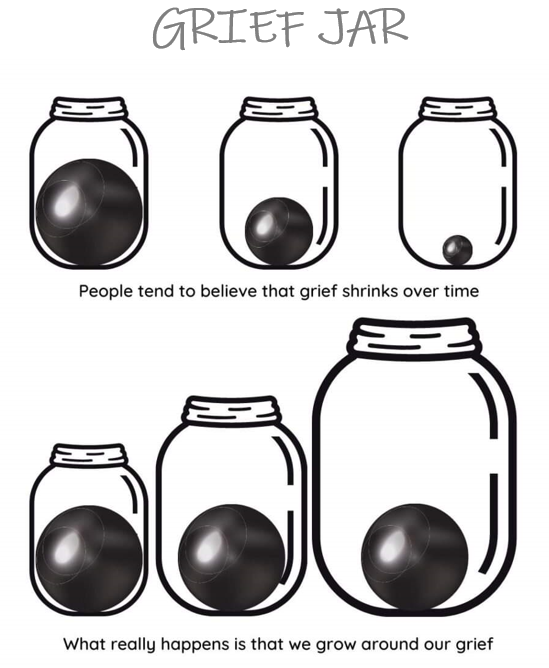
The Perinatal Podcast – Growing Around Our Grief – with Rebekah Lowenstein, LCSW, PMH-C

As promised in our episode, here is the Grief Jar metaphor Rebekah referenced.

Be sure to check out the full episode where we discuss many aspects of Growing Around Our Grief, links below.

Focus Friday: Boundaries, Round 2

🌟 Focus Friday: Honoring Your Boundaries for Better Focus 🌟

This week, let’s spend a little more time talking about boundaries—with tasks, people, and even ourselves. If you struggle with distractibility or focus issues, boundaries aren’t just helpful—they’re essential.

🛑 Boundaries with Tasks:
Do you ever catch yourself saying “Just one more thing” only to realize hours have passed? Learning to stop—even when the task isn’t perfect—protects your focus and prevents burnout. A helpful tip? Use timers or set alarms to create intentional stopping points.

🤝 Boundaries with Others:
Saying “no” is hard, but remember: a “no” to someone else can be a “yes” to yourself. Practice declining commitments that don’t align with your values or goals. It’s not selfish—it’s self-respect.

🧠 Boundaries with Yourself:
Sometimes, the hardest person to set boundaries with is YOU. Whether it’s doom-scrolling, overcommitting, or avoiding tasks, try to catch yourself in the moment. Replace guilt with curiosity: “Why am I doing this, and what do I actually need?”

This week, challenge yourself to set just one boundary—big or small—and see how it impacts your ability to focus.

✨ Ready to take this deeper? If setting boundaries feels overwhelming or you’re unsure where to start, my coaching program is here to help. Together, we’ll build strategies that fit your life and empower you to stay focused on what matters most. DM me to learn more or book a free discovery call! ✨

Your focus is worth protecting. Let’s make it a priority!

Click the link below to schedule your FREE Focus Call!

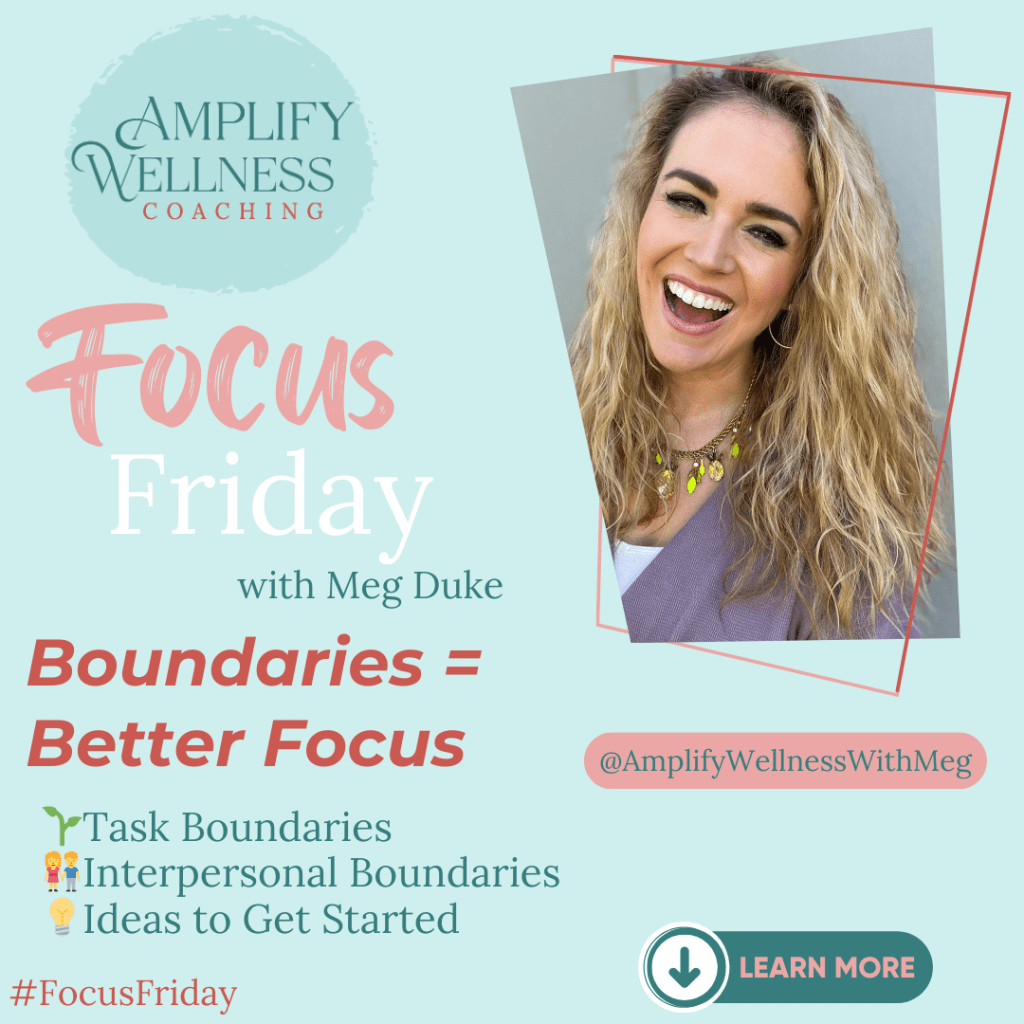
Focus Friday: Building Boundaries for Better Focus

Setting boundaries is more than just saying “no” to others—it’s about defining your limits with tasks, relationships, and, most importantly, yourself. For those of us who struggle with distractibility and focus, boundaries can be a game-changer. They aren’t just about protection but are tools to safeguard your time, energy, and mental bandwidth. Let’s explore how establishing boundaries can make your life feel more intentional and focused.

Task Boundaries: Prioritizing What Matters

Tasks can be endless, especially when there’s a tendency to jump from one to another without finishing. A helpful boundary here is deciding on a “done for now” point with tasks instead of feeling compelled to work until perfection. It’s about allowing yourself to walk away and revisit, which actually improves focus in the long run.

Here are some boundaries to try with your to-dos:

  • Limit Your Task List: Start the day with a focused list of no more than three priority tasks.
  • Time Blocking: Allocate specific blocks for work without multitasking.
  • Set Task-Specific Boundaries: Define what a task looks like when it’s “good enough,” so you don’t get caught up in perfectionism.

Interpersonal Boundaries: Protecting Your Peace

Interpersonal boundaries can prevent over-commitment and help manage the energy we give to others. Saying “no” to something, even if it seems minor, frees up energy to focus on what truly aligns with your priorities.

Consider these interpersonal boundaries to protect your peace:

  • Avoid Automatic Yes: Give yourself time before committing to something.
  • Protect Your Focus Windows: Let others know when you’re focusing and ask for respect for that boundary.
  • Set Limits on Social Interaction: Especially for those who tend to get easily drawn into long conversations, set a clear limit or politely exit when you feel drained.

By setting boundaries with both tasks and people, we create a structure that supports focus and minimizes distractions. These boundaries help prioritize what matters, limit overwhelm, and ultimately build a stronger, more intentional focus.

Ready to get started on your Focus Journey? Grab a time slot to have a free Focus Call with me below! 👇
Focus Friday: Understanding and Overcoming Decision Fatigue

What is Decision Fatigue?

Decision fatigue occurs when the quality of your decisions decreases as a result of mental exhaustion from making too many choices. Throughout the day, we’re faced with endless decisions—what to wear, what to eat, when to respond to emails, and whether to push through one more task or take a break. By the time evening rolls around, even simple choices can feel overwhelming. It’s not just the big decisions that wear us down—the accumulation of minor ones takes a toll too.

This kind of fatigue impacts everyone, but it can be particularly challenging for people with ADHD, who already experience difficulty with executive functioning. When focus is a limited resource, decision-making can become even more draining.


How Decision Fatigue Impacts People with ADHD

For people with ADHD, every choice can feel like a mini mental marathon. Decision-making taps into working memory, impulse control, and the ability to prioritize—functions that can already be overtaxed. ADHD brains thrive on novelty and urgency, which means they often struggle with mundane but necessary decisions (like meal planning or organizing).

When decision fatigue hits, individuals with ADHD may:

  • Avoid making decisions altogether (leading to procrastination)
  • Default to impulsive choices that may not align with their goals
  • Feel overwhelmed or anxious over simple tasks
  • Mentally shut down and experience emotional exhaustion

The mental strain of having too many options or making decisions on the fly can turn ordinary days into chaotic, draining experiences.


How to Recognize Decision Fatigue

Some signs of decision fatigue include:

  • Feeling paralyzed by choices, even when they are small
  • Irritability or frustration when asked to make a decision
  • Procrastination on tasks that require planning
  • Impulsive actions you later regret (like impulse purchases or saying yes to obligations)
  • Brain fog or zoning out when trying to decide on a course of action

For those with ADHD, these signs can overlap with everyday symptoms, making it harder to recognize when fatigue is playing a role. One key way to distinguish decision fatigue is by looking at the timing: do you feel increasingly overwhelmed by choices as the day progresses?


Preventing Decision Fatigue From Escalating

Prevention is key when it comes to managing decision fatigue—especially for those prone to distraction or mental overload. Here are a few strategies to keep it from ramping up:

  1. Automate small decisions. Create routines to remove decision-making friction. For example, choose a “uniform” (like a rotation of favorite outfits) or set the same breakfast each morning to cut down on daily choices.
  2. Batch your decisions. Make decisions ahead of time—such as meal planning for the week—so you don’t have to think about it day-to-day.
  3. Use tools like timers or apps. When your brain is too tired to think, external supports (like reminders or alarms) take the pressure off.
  4. Say no to “option overload.” Avoid situations that overwhelm you with too many choices. Opt for stores or services that simplify options when shopping or planning.

How to Overcome Decision Fatigue

If decision fatigue has already set in, don’t worry. There are ways to reset and recharge your mental energy:

  1. Reduce your cognitive load. Make fewer decisions for the rest of the day. If possible, delay non-urgent decisions or delegate them to someone else.
  2. Take breaks. Mental rest is essential. Even a 10-minute walk or mindfulness exercise can help your brain reboot.
  3. Limit decisions to “good enough” instead of perfect. For those with ADHD, perfectionism can sneak in and worsen fatigue. Aim for “done” over perfect, and trust that it’s okay to pick a “good enough” solution.
  4. Use self-compassion. Recognize when you’re at your limit and give yourself permission to pause. It’s okay if you don’t have all the answers today.
  5. Rely on systems. When your energy is low, it helps to have systems in place—like to-do lists, pre-planned meals, or routines—to reduce the burden of making choices from scratch.

Final Thoughts

Decision fatigue is a universal experience, but for people with ADHD, it can make day-to-day life even more exhausting. Understanding how decision fatigue shows up—and taking small, proactive steps—can reduce its impact. Automating choices, setting boundaries around decision-making, and prioritizing self-care can help restore your mental energy.

On those days when decisions feel impossible, remember: it’s okay to ask for help, lean on your systems, and pause until you feel ready again. You don’t have to navigate fatigue on willpower alone—small strategies can go a long way in preserving your energy for what matters most.


How do you experience decision fatigue?
Do you notice it sneaking up on you, or does it hit like a wall at the end of a long day? Share your experience and strategies in the comments! Let’s support each other in making our days a little easier.

Ready to get started on your Focus Journey? Grab a time slot to have a free Focus Call with me below! 👇

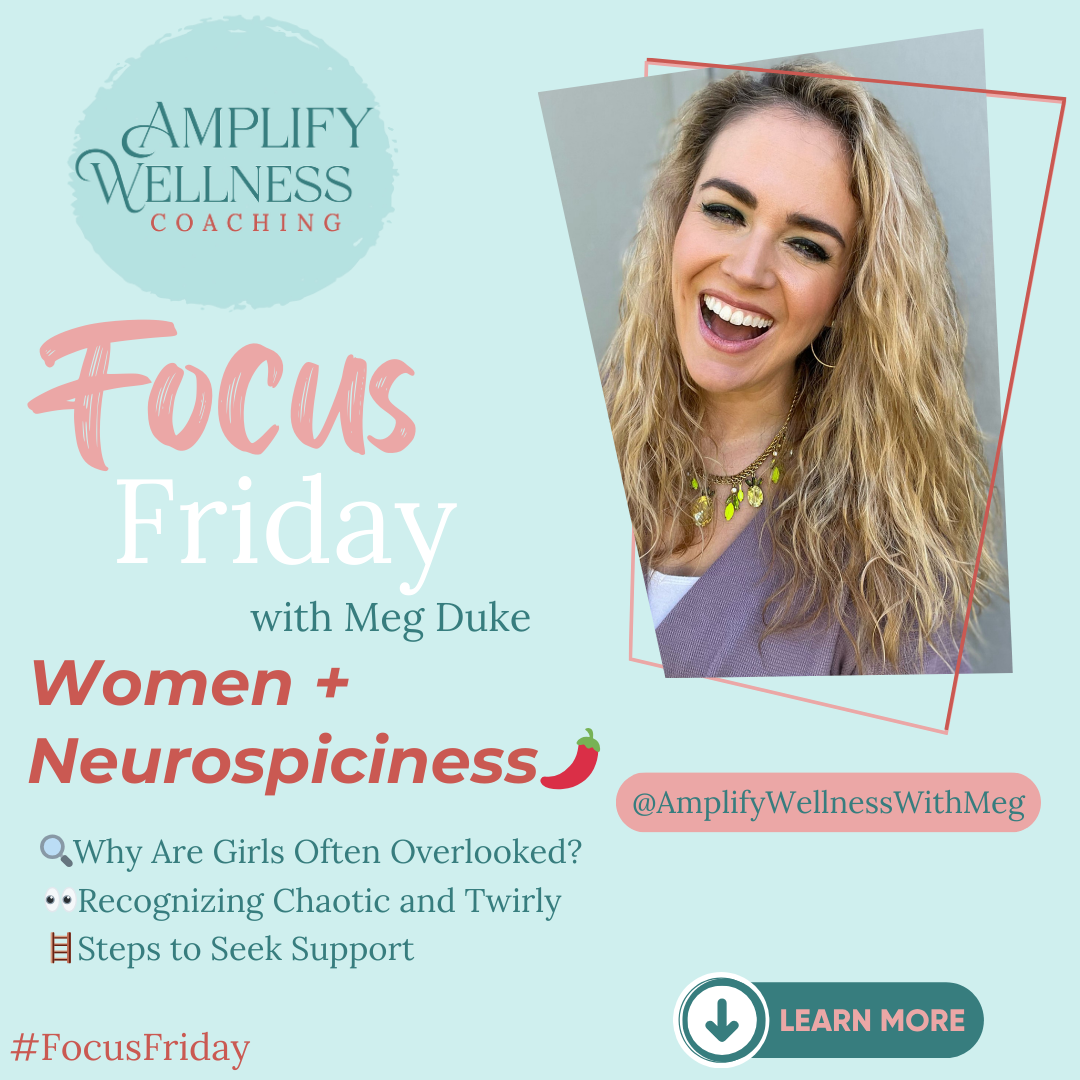
Focus Friday: Women + Neurospiciness🌶️

For many women with ADHD, the journey of understanding their neurospicy 🌶️ minds often begins far later than it should. While boys tend to receive more attention and diagnoses for ADHD in childhood, many girls are overlooked, often masking their symptoms or being labeled as “daydreamers” or “disorganized.”

This pattern of missed recognition continues into adulthood, where the chaotic, twirly 🌪️ energy of ADHD can feel overwhelming—impacting everything from work to relationships to personal care.

Why Are Girls Often Overlooked?

Historically, ADHD has been viewed through a male lens—hyperactivity, impulsivity, and acting out. Yet, for girls, the signs can manifest in more subtle ways. Girls with ADHD are more likely to:

  • Be inwardly distracted 💭, daydreaming, or zoning out, rather than hyperactive.
  • Feel overwhelmed and anxious 😟, masking their challenges with perfectionism.
  • Become people pleasers 🙋‍♀️, working extra hard to hide their forgetfulness, disorganization, or struggles with focus.

Because these behaviors don’t disrupt others, they often go unnoticed by teachers, parents, and even friends. Unfortunately, this means many women only discover their ADHD later in life, often after years of feeling misunderstood, exhausted 🥱, and overwhelmed.

Recognizing Chaotic and Twirly ADHD Symptoms in Women

For those who grow up without diagnosis or support, the signs of ADHD often evolve into more chaotic and “twirly” 🌪️ behaviors in adulthood. What does this look like?

  • Perpetual multitasking but struggling to finish tasks 📝.
  • Mental clutter—feeling like your thoughts are spinning in every direction 🌀, making it difficult to focus on one thing.
  • Chronic disorganization—always losing things 🧩, running late ⏰, or needing constant reminders.
  • Emotional overwhelm 😫—difficulty regulating emotions, swinging from moments of intense hyper-focus to complete burnout.
  • Procrastination and time blindness ⏳—underestimating how long things will take or getting lost in time, especially when juggling multiple roles (work, parenting, personal care).

If you recognize these patterns, it’s essential to remember that ADHD is a neurodevelopmental difference, not a character flaw 🌱.

Steps to Seek Support

Whether you’re newly suspecting ADHD or are already diagnosed, the key to thriving is recognizing what works for you. Here’s how you can begin seeking support:

  1. Consider therapy or coaching. Mental Health therapy and ADHD-specific coaching can help develop strategies for managing symptoms, setting boundaries, and creating systems that align with your needs 🛠️.
  2. Leverage ADHD-friendly tools. Planners with visual reminders 📅, time management apps like Pomodoro 🍅, and mindfulness techniques can help reduce overwhelm and improve focus.
  3. Connect with others. Whether it’s a support group, online community 💬, or talking to other women with ADHD, hearing others’ stories can reduce feelings of isolation and help you feel more understood.
  4. Prioritize self-compassion. 💖 Remember, you’re not lazy or unmotivated—your brain simply processes things differently. Gentle accountability and small shifts in self-talk can help create a more supportive internal environment.

Women with ADHD often feel like they’re spinning through life 🌪️, trying to keep everything in balance, but you don’t have to manage it all on your own. Recognizing your strengths and challenges is the first step toward building systems and support structures that honor your neurodiversity.

Let’s take a moment today to check in with ourselves, acknowledge what’s working ✅, and give ourselves grace as we find new ways to focus and flourish 🌸.

Ready to get started on your Focus Journey? Grab a time slot to have a free Focus Call with me below! 👇
October is ADHD Awareness Month!

October marks ADHD Awareness Month, a time dedicated to raising awareness, reducing stigma, and educating others about Attention Deficit Hyperactivity Disorder (ADHD). For those of us who work with or experience ADHD firsthand, this month is an opportunity to celebrate the uniqueness and strengths of individuals with ADHD while also fostering understanding about the challenges they face.

Why ADHD Awareness Matters

ADHD is often misunderstood, sometimes seen as mere “daydreaming” or “being disorganized.” But it’s so much more complex than that. ADHD is a neurological condition affecting attention, impulse control, and organization. It shows up in various ways—distractibility, hyperactivity, trouble with follow-through, time blindness, and difficulty regulating emotions. These symptoms can make daily tasks feel overwhelming, yet people with ADHD also possess incredible creativity, resilience, and unique problem-solving abilities.

By raising awareness, we open the door to empathy and better support, and we pave the way for those living with ADHD to embrace their strengths and find strategies that work for them. Awareness is also crucial for early identification and intervention, especially for children, teens, and adults who may have gone undiagnosed for years.

ADHD Awareness in Numbers

Did you know that ADHD affects an estimated 8.4% of children and 2.5% of adults worldwide? Yet, many still go undiagnosed or misdiagnosed. During ADHD Awareness Month, it’s essential to recognize that ADHD can look different for everyone—especially across different ages and genders. Women, for example, are more likely to present with inattentive symptoms, often leading to a delayed diagnosis compared to men, who may exhibit more hyperactivity. This makes it crucial to understand the diversity of ADHD experiences.

Breaking Down Myths and Stigmas

One of the most important goals of ADHD Awareness Month is busting the myths that often surround this condition. Here are some common misconceptions:

  • Myth: ADHD is just an excuse for laziness.
    • Fact: ADHD is a real neurodevelopmental disorder that makes certain tasks more difficult, not due to lack of effort or care, but because of how the brain processes information.
  • Myth: ADHD is only diagnosed in children.
    • Fact: Many adults live with undiagnosed ADHD well into their 30s, 40s, and beyond. The condition doesn’t disappear with age, although symptoms may evolve.
  • Myth: People with ADHD can’t focus.
    • Fact: Individuals with ADHD often experience “hyperfocus,” periods of intense concentration on tasks they enjoy, while struggling to maintain focus on less stimulating tasks.

How to Get Involved

Whether you live with ADHD, love someone with ADHD, or simply want to learn more, there are many ways to participate in ADHD Awareness Month:

  1. Educate Yourself and Others: Read articles, listen to podcasts, and engage with ADHD communities to learn more about the condition. Share what you’ve learned to help others understand.
  2. Join or Start a Conversation: Use social media to join the discussion with hashtags like #ADHDAwareness and #ADHDAwarenessMonth. Share your own experiences or offer support to others.
  3. Advocate for Change: Push for better accommodations in workplaces and schools, encourage policies that support neurodiverse individuals, and normalize seeking help for ADHD.
  4. Support ADHD-Friendly Resources: From coaching to therapy to ADHD-specific apps, there are many tools out there that can help. Whether you’re managing ADHD yourself or helping a loved one, explore and share these resources.

Embracing the Strengths of ADHD

While ADHD comes with its own set of challenges, it’s also important to recognize and celebrate the strengths that often accompany it. Many people with ADHD are known for their creativity, energy, and ability to think outside the box. When given the right tools, support, and understanding, individuals with ADHD can excel in their own unique ways.

This ADHD Awareness Month, let’s celebrate those strengths, foster a deeper understanding, and continue building communities where those with ADHD feel seen, supported, and empowered to thrive.

Ready to get started on your Focus Journey? Grab a time slot to have a free Focus Call with me below! 👇