Focus Friday: Are You Procrastinating… or Burnt Out? 🧠🔥

We’ve all been there:
Staring at the to-do list, watching the clock tick by, mentally negotiating how much longer we can delay that one thing.

But here’s the question worth asking…
Are you procrastinating—or are you actually burnt out?

Because while they can look the same on the surface, what’s going on underneath is very different. And when we mislabel what’s really happening, we tend to treat the symptom instead of the root cause. 🧩


🤔 What is Procrastination?

Procrastination is about avoidance.
There’s usually something specific we’re dodging—fear of failure, boredom, perfectionism, overwhelm, or executive dysfunction.
We delay the task, even when we know we want or need to do it.

It might sound like:
🌀 “I don’t know where to start.”
📦 “I’ll do it after I clean my space.”
⏰ “I still have time. It’s fine.”


🔥 What is Burnout?

Burnout is about capacity.
It’s a physical, mental, and emotional depletion where your brain and body just… can’t.
Even if the task is clear, even if you want to do it, your tank is empty.

It might sound like:
💤 “Everything feels heavy.”
😵 “Even small tasks feel impossible.”
🙅 “I just don’t care anymore, and I hate that I don’t care.”


⚖️ How to Tell the Difference

Try asking yourself:

➡️ “Do I have the energy but not the motivation?” → Might be procrastination.
➡️ “Do I have the motivation but no energy or capacity?” → Might be burnout.
➡️ “If this task suddenly became urgent (like due in 10 mins), could I do it?”
If yes, that’s likely procrastination. If no, you may be too depleted to act.

Procrastination needs structure, support, and compassion.
Burnout needs rest, recovery, and grace.


🛠️ How to Navigate It

🌟 If it’s procrastination:

  • Break the task down into ridiculously small steps
  • Set a short timer (try a 5-minute start)
  • Use body-doubling or accountability
  • Try curiosity over judgment: “What feels hard about this right now?”

🌿 If it’s burnout:

  • Lower the bar (a lot)
  • Rest—guilt-free and without “earning it”
  • Ask for help or delay non-urgent tasks
  • Fill your tank: food, hydration, movement, sleep, joy

You don’t need to be productive to be worthy.
You don’t need to be “better” to rest.
Sometimes, naming what’s really going on is the most productive thing you can do. 💛


💌 Want more gentle ADHD-friendly tools?

My FREE Navigating ADHD Mini Workbook is full of strategies for building momentum without burning out.

New Episode! The Mini Episodes – Ep. 10

💫Welcome to the Mini Episodes – Ep. 10!💫

I’ve received so many wonderful comments and stories from you all over the years, and I think it’s time to share them on the show! It’s incredibly validating to hear from others and realize we’re not alone on our mental health journeys. Plus, your insights and tips for making improvements in your lives are truly inspiring.

If you’d like to share your story, DM me or send your email to me at Meg@MegDukeLCSW.com. And if you’re feeling up for it, you can even send a voice memo!

Welcome back to #ThePerinatalPodcast – The Mini Episodes!

#validation #parentingtips #slowdown #chaoticandtwirly #amplifywellness #parentinghacks @applepodcasts @spotifypodcasts @youtube

Thanks to our show’s sponsors!

@momandaofficial Promo Code: PERINATAL
@essenther.official Promo Code: AMPLIFYWELLNESSWITHMEG
@needed Promo Code: PERINATALPODCAST
@choosemuse Promo Code: AMPLIFY WELLNESS

Focus Friday: Navigating ADHD—Your Free Mini Workbook is Here! 📖✨

Let’s talk about something I hear ALL the time from my ADHD clients:

🧠 “I know what I need to do… but I just don’t do it.”
🌀 “I get stuck in overwhelm and don’t even know where to start.”
💡 “I’ve tried ALL the planners and systems, but nothing seems to stick.”

Sound familiar? If so, you’re not alone! ADHD brains don’t work the way traditional productivity and organization tools expect them to. That’s exactly why I created the Navigating ADHD Mini Workbook—a FREE resource designed to help you work with your brain, not against it. 🎉

Why You Need This Workbook (Especially If You Have ADHD, but even if you don’t!)

This isn’t just another boring planner or list of generic advice that doesn’t take ADHD into account. Nope! This workbook is built to help you:

Understand your ADHD patterns (so you stop fighting your own brain)
Get unstuck when overwhelm takes over
Find tools that actually work for YOU (instead of forcing yourself into systems that don’t)
Reduce decision fatigue and streamline your day
Learn how to follow through—without relying on ✨sheer willpower✨

It’s all about practical, actionable strategies that you can actually use in real life.

What’s Inside? 📝

📌 ADHD-Friendly Organization Tips – No more one-size-fits-all nonsense. This is about finding what works for you.
📌 Step-by-Step Tools to Reduce Overwhelm – Because getting started is half the battle.
📌 Mindset Shifts for ADHD Success – Let’s stop the cycle of guilt, shame, and frustration.
📌 Simple, Realistic Planning Strategies – That don’t require you to magically become a different person overnight.
📌 Gentle Accountability Tips – Because motivation alone won’t cut it.

Why Grab It Now?

Because free ADHD-friendly tools that actually make sense aren’t easy to come by! If you’ve ever felt like:

🚫 Traditional planners are useless because they don’t match your brain’s way of working
🚫 You start strong but quickly burn out
🚫 You’re constantly reinventing the wheel when it comes to productivity
🚫 You struggle with consistency & follow-through
🚫 You want something simple, ADHD-friendly, and actually helpful

Then this workbook is for you. 🎯

How to Get It (For FREE!)

And if you know a friend, co-worker, or loved one who struggles with ADHD, send them this link—because we all deserve tools that actually work. 💛

Let’s stop trying to force ADHD brains into neurotypical systems and start navigating our strengths instead. You in? 🚀

Focus Friday: Overachieving as an ADHD Coping Strategy🏆💡

Do you thrive under pressure but secretly feel like you’re barely holding it together? Are you the person who volunteers for everything, juggles a million projects, and gets praised for being so productive—yet deep down, you’re exhausted? 😵‍💫

If this sounds familiar, you might be using overachievement as a way to navigate ADHD. 🧠✨

At first glance, it doesn’t seem like a bad thing, right? You get things done, people admire your work ethic, and you seem like you have it all figured out. But here’s the catch: it’s not sustainable. Overachieving can become a mask for deeper struggles with focus, impulsivity, or self-worth. Let’s talk about why this happens, how to recognize the patterns, and what to do about it.


Why Do ADHD Brains Tend to Overachieve?

For many people with ADHD, overachievement starts as a coping mechanism—sometimes without even realizing it. Here’s why:

🎯 Constant Need for Stimulation – Your brain craves excitement, and a packed schedule keeps you engaged. 📅

🎭 Masking ADHD Struggles – If you’re “successful,” people are less likely to notice you struggle with organization, memory, or follow-through.

🏆 Validation Seeking – ADHD can make self-worth feel shaky, so external praise becomes fuel to keep going.

😰 Fear of Failure – If you’re always going above and beyond, you don’t have time to fail—or so you hope.

Hyperfocus Mode – You can crush a task when you’re in the zone, but burnout follows when that focus fades.

For some, overachieving starts in childhood—being the “gifted” kid who seemed responsible but actually struggled behind the scenes. That’s why it can be helpful to ask a parent, teacher, or trusted adult about what they noticed when you were younger. They might give you insight into patterns you’ve carried into adulthood without realizing it.


Signs You Might Be Overachieving to Cope with ADHD

If you relate to more than a few of these, it might be time to reevaluate your relationship with achievement:

✅ You take on too many commitments because “busy” feels better than stillness.
✅ You thrive on tight deadlines but struggle with everyday consistency.
✅ You get anxious when you’re not being “productive.”
✅ You say yes to too many things because you fear disappointing others.
✅ You feel like you’re always behind, no matter how much you accomplish.
✅ You overcompensate for forgetfulness or procrastination by going overboard when you do get things done.
✅ You feel burnt out but keep pushing forward because slowing down feels worse.


How to Break the Cycle of Overachievement 🚦

Overachieving isn’t inherently bad—but when it’s fueled by ADHD struggles rather than healthy ambition, it can be draining. Here’s how to find balance:

1️⃣ Give Yourself Permission to Be “Good Enough”

Not everything has to be 10/10, gold star, best-of-the-best. 🏅 Some tasks just need to be done. Ask yourself:

🔹 Would this still be acceptable at 80% effort? (Spoiler: It probably would!)
🔹 Who am I trying to impress?
🔹 Does this actually need to be perfect, or is “done” better than “perfect” here?

2️⃣ Prioritize Rest as an Essential Task

Rest isn’t wasted time—it’s fuel. ⚡ If you struggle to slow down, schedule intentional breaks like you would a meeting. Some ADHD-friendly rest ideas:

🌱 Low-energy hobbies (puzzles, doodling, music)
📖 Read for fun (not self-improvement!)
💆 Nap without guilt (because burnout isn’t the goal)

3️⃣ Stop Saying “Yes” to Everything 🚦

Before committing to a new project, ask yourself:

🔹 Do I actually have time for this?
🔹 Will I resent this later?
🔹 Am I saying yes just for the dopamine hit?

It’s okay to say no—or even “not right now.” 🙅‍♀️

4️⃣ Make “Sustainable Success” Your Goal

ADHD can make consistency harder than intensity. Instead of burning bright and crashing, aim for steady progress:

✔️ Work in realistic time blocks (Pomodoro method, body doubling)
✔️ Automate & delegate where you can
✔️ Set limits on how much you take on

5️⃣ Ask Someone About Your Childhood Patterns 👶🧠

If this blog post is hitting home, it might be helpful to talk to a trusted adult—a parent, teacher, or older relative who knew you as a kid. Sometimes, the things we struggled with (or overcompensated for) as children shape how we navigate ADHD today. Their insights could help you understand why you developed these patterns—and how to break free from them.


You Are More Than Your Productivity 💛

Overachieving isn’t always bad, but if you’re constantly exhausted from proving your worth through success, it might be time to slow down. ADHD brains are brilliant, creative, and capable—but you deserve to feel good about yourself even when you’re not “achieving.” 💡

If this resonated with you, my FREE Navigating ADHD Mini Workbook has tools to help you understand your patterns and build systems that actually work for your brain. 💛

Have you noticed overachievement patterns in yourself? Drop a 💡 if this hit home!

The Perinatal Podcast | Embrace. Adapt, & Thrive: Navigating Neurodivergence as a Busy Professional with Christina Gray | Episode 104

Christina Gray is a high-performing real estate professional, designer, and creative problem solver who also happens to live with ADHD—a trait she was diagnosed with in first grade and has spent her life understanding, embracing, and using to her advantage. Raised in a household where ADHD was never treated as a deficit but rather a different way of thinking, Christina grew up seeing her neurodivergence as a strength.

In her fast-paced career in real estate, Christina wears many hats: agent, designer, home stager, marketing strategist, consultant, and sometimes even therapist. Her ADHD allows her to thrive in environments where she can multitask, stay on her feet, and engage with new challenges daily. But it hasn’t always been easy—she’s spent years developing systems to stay organized, motivated, and grounded in the midst of mental chaos.

Christina now regularly finds herself supporting others—friends, clients, and colleagues—who are navigating their own ADHD journeys, whether diagnosed or not. She believes in giving people permission to adapt their lives to fit their brains, not the other way around.

Outside of her professional world, Christina is a proud rescue mom to two dogs and a cat, active in local animal rescue and TNR (which I had to google, it’s trap-neuter-release for stray cats, love that) efforts. She’s a foodie at heart, loves to travel, and starts every day with a solid cup of coffee (not a morning person—she’s tried). One of her favorite daily rituals is walking with her husband and dogs, unplugged from tech, reconnected to each other.

Welcome back to The Perinatal Podcast!

Thank you to today’s show sponsors!
Essenther – Promo Code – AMPLIFYWELLNESSWITHMEG

Momanda – Promo Code – PERINATAL

Needed – Promo Code – PERINATALPODCAST

Muse – Promo Code – AMPLIFY WELLNESS

Focus Friday – Breaking Free from Waiting Mode

Have you ever found yourself stuck in a state of limbo, waiting for the “perfect” time, the right mood, or external circumstances to align before you take action? If you have ADHD (or even if you don’t), you might be familiar with Waiting Mode—that mental freeze where you’re aware of what needs to be done but can’t seem to move forward. It’s that frustrating state where the minutes, hours, or even days slip by because something external is holding your brain hostage.

It might look like this:
🔹 Waiting for a response before moving on to the next task.
🔹 Sitting in your car, scrolling your phone, because you only have 10 minutes before your next obligation.
🔹 Not starting a project because you don’t have all the “right” tools or enough time to do it perfectly.
🔹 Feeling paralyzed when transitioning between tasks, unsure of what to do next.

Why Does Waiting Mode Happen?

For many neurodivergent brains, Waiting Mode is a product of executive dysfunction and time blindness. The transition between “what’s next” and “what now” can feel overwhelming, like you’re waiting for an internal green light that never comes. Your brain struggles to initiate tasks without a strong external cue—so instead of shifting gears, you stay parked.

The problem? The longer you wait, the harder it becomes to restart. The transition feels heavier, and your motivation drains while the anxiety of not doing something starts creeping in.

How to Escape Waiting Mode

If you find yourself stuck, here are some ways to disrupt the cycle and get unstuck:

🕒 Create an “In-Between” List
Have a go-to list of small, easy-to-start tasks for those times when you’re waiting. This could be responding to a quick email, tidying your space for five minutes, or even stepping outside for fresh air. Small momentum-builders count!

🔄 Use the “Next Right Thing” Rule
Instead of focusing on the whole picture, ask: What is one small action I can take right now? Whether it’s opening your laptop, sending one message, or just standing up—any movement counts as progress.

📌 Set a Timer for Intentional Breaks
If you find yourself doomscrolling or frozen in place, time-box your waiting. Set a 5-minute timer and give yourself permission to do whatever you want in that window. When the timer ends, choose a next action—no matter how small.

🎧 Engage Your Body
Movement jumpstarts transitions. Stand up, stretch, do a quick lap around the room—anything to shift your energy. This tells your brain it’s time to shift gears.

💡 Acknowledge the Emotional Weight of Transitions
Sometimes, waiting mode isn’t just about the logistics—it’s about the emotional resistance to starting something new. Validate that feeling, and then gently remind yourself: I don’t have to feel ready to begin.

Need More ADHD-Friendly Strategies?

Breaking free from Waiting Mode is just one piece of the ADHD puzzle. If you want practical, realistic strategies to navigate focus challenges, executive dysfunction, and time blindness, check out my FREE Navigating ADHD Mini Workbook! It’s packed with actionable tools designed to help you work with your brain, not against it.

Final Thoughts

Waiting Mode happens to the best of us, but it doesn’t have to hold you hostage. The key is recognizing when you’re in it and giving yourself the tools to shift out of inertia. Small, imperfect action is always better than waiting for the perfect moment.

What’s one way you nudge yourself out of Waiting Mode? Let’s talk about it! ⬇️

The Mini Episodes – Ep. 9

💫Welcome to the Mini Episodes – Ep. 9!💫

I’ve received so many wonderful comments and stories from you all over the years, and I think it’s time to share them on the show! It’s incredibly validating to hear from others and realize we’re not alone on our mental health journeys. Plus, your insights and tips for making improvements in your lives are truly inspiring.

If you’d like to share your story, DM me or send your email to me at Meg@MegDukeLCSW.com. And if you’re feeling up for it, you can even send a voice memo!

Click here to listen!

Welcome back to #ThePerinatalPodcast – The Mini Episodes!

validation #parentingtips #slowdown #chaoticandtwirly #amplifywellness #parentinghacks @applepodcasts @spotifypodcasts @youtube

Thanks to our show’s sponsors!

@momandaofficial Promo Code: PERINATAL
@essenther.official Promo Code: AMPLIFYWELLNESSWITHMEG
@needed Promo Code: PERINATALPODCAST
@choosemuse Promo Code: AMPLIFY WELLNESS

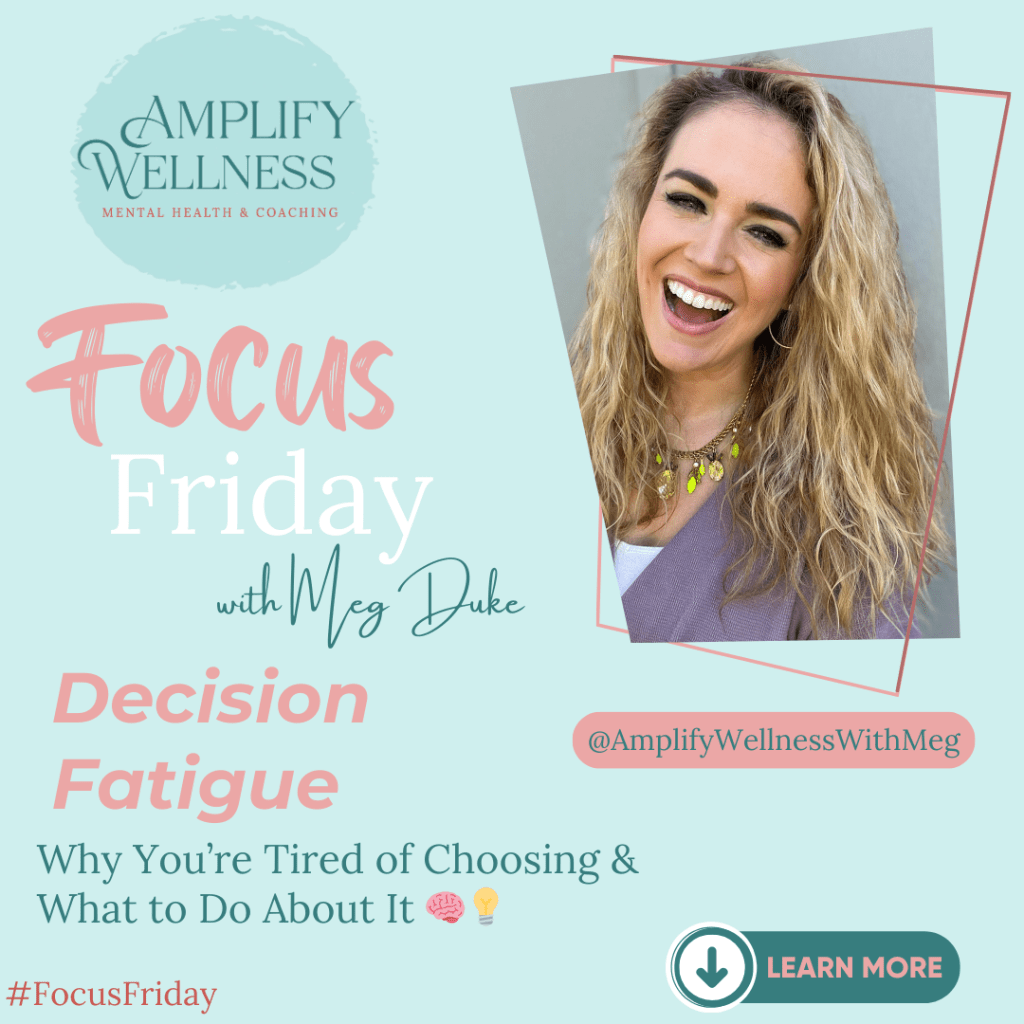
Focus Friday: Decision Fatigue💡

Why You’re Tired of Choosing & What to Do About It 🧠

Ever feel like your brain just can’t make one more decision? 🤯 You stare at a menu, scrolling endlessly, unable to pick something to eat. You walk into a store, overwhelmed by the options. Or maybe it’s the tiny choices—what to wear, what to clean first, what task to tackle—that leave you feeling stuck.

That’s decision fatigue, and it’s real. The more decisions we make, the harder each one becomes. And if you have ADHD, executive dysfunction, or just a lot on your plate (hello, modern life!), this can hit even harder.

The good news? You don’t have to live in a state of mental exhaustion. Let’s talk about what’s happening in your brain and how to reclaim some of that energy. ⚡


What Is Decision Fatigue?

Your brain has a limited reserve of decision-making power each day. 🧠 Think of it like a smartphone battery—every choice you make drains a little bit of energy. By the time you hit the afternoon slump, even simple choices feel overwhelming.

That’s when we fall into patterns like:
🔁 Avoidance (I’ll just deal with it later… or never.)
🔁 Impulsivity (Whatever, I’ll just pick the first thing I see.)
🔁 Overthinking (What if I make the wrong choice?!)

If this sounds familiar, you’re not alone. And if you have ADHD, your brain might struggle even more because it’s constantly filtering through a flood of information while trying to prioritize, plan, and execute. No wonder you’re exhausted!


How to Reduce Decision Fatigue 🔋

The key? Fewer choices = more energy. Here are simple ways to conserve your mental battery:

1️⃣ Reduce Daily Decisions with Routines

Ever notice why successful people wear the same outfit every day? Steve Jobs, Barack Obama, even Einstein—they all eliminated trivial choices to save brainpower for bigger decisions. You can do the same by:
👕 Creating a “capsule wardrobe” (pre-planned outfits)
🥗 Meal prepping or rotating favorite meals
Setting up morning & night routines

The more automatic something is, the less energy it drains.

2️⃣ Use the 2-Minute Rule for Small Decisions

If a decision takes less than 2 minutes, don’t overthink it—just decide and move on! ⏳

🍎 Apple or banana? Just grab one.
📧 Reply now or later? If it’s quick, answer now.
👚 Red shirt or blue shirt? Either works—pick and go!

The more you train your brain to trust your choices, the easier it gets.

3️⃣ Set Limits on Choice Overload

Some things just have too many options (looking at you, Netflix 🎥 and online shopping 🛍️). Give yourself boundaries to cut down on time-wasting indecision.

📺 Netflix rule → Pick from your “watch next” list, no scrolling!
🛒 Online shopping? → Set a time limit (10 mins, then decide!).
🍽 Ordering food? → Have a go-to list of favorites.

4️⃣ Outsource & Automate

Free up mental space by letting technology, lists, or other people take some of the load.

Auto-pay bills so you don’t have to remember.
Use a to-do list app so you don’t waste time recalling tasks.
Let others decide—ask a friend, partner, or kiddo to pick dinner.

5️⃣ Give Yourself Decision-Free Days

If you’re extra burned out, try a low-decision day. Plan ahead so you can coast through with minimal choices. 👏

💤 Lazy Sunday? Wear PJs, eat leftovers, and watch whatever’s on.
🛒 Errands day? Stick to a list—no browsing!
🍽 Meal-prepped Monday? Eat what’s already made.

This helps reset your mental energy so you can tackle the bigger stuff.


You Don’t Have to Choose Alone! ❤️

Decision fatigue is real, but you can take small steps to make daily life less overwhelming. If your brain feels like it’s constantly on overdrive, try simplifying choices, setting boundaries, and automating where you can. 🌟

And if decision fatigue is a major struggle for you, you’re not alone! My FREE Navigating ADHD Mini Workbook has practical strategies to help you cut through mental clutter and find systems that work for you. 🧠✨

What’s one decision that always drains your energy? Drop it in the comments—I bet you’re not the only one! ⬇️

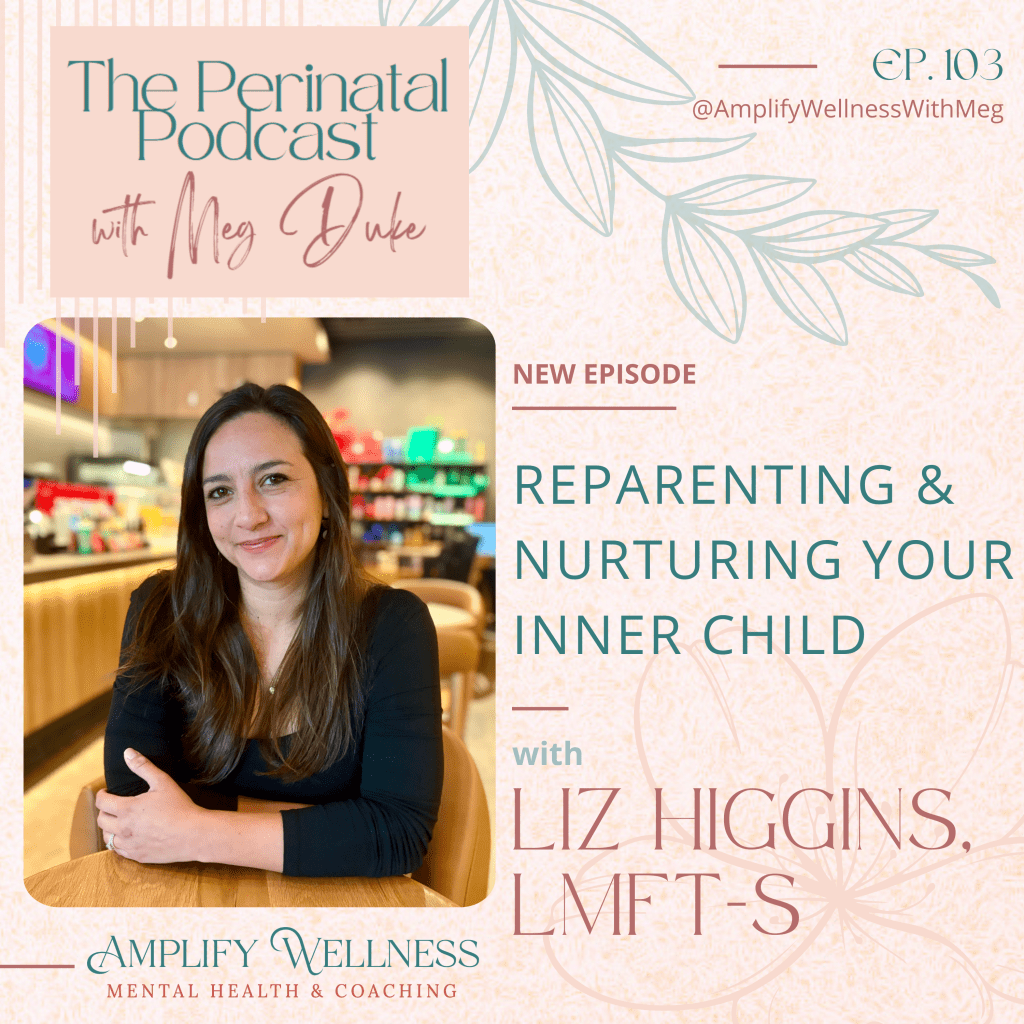
The Perinatal Podcast | Reparenting & Nurturing Your Inner Child with Liz Higgins | Episode 103

Liz is back!

This week on The Perinatal Podcast, Liz Higgins, LMFT-S, returns to educate us all on Reparenting and nurturing your inner child. It’s so much new information for me, and I’m elated to have learned myself and now to get to share with y’all!

Liz is a licensed couples and individual therapist, writer, and the host of The Millennial Life Podcast. Her approach integrates deep emotional work with strategic insight, allowing her clients to unlock greater creativity, resilience, and connection in every aspect of their lives. Liz founded Millennial Life Counseling in 2017, a Dallas based practice helping millennial couples and individuals create epic marriages, relationships, and lives. Her work has been featured on platforms including Huffington Post, The New York Times, Elite Daily, Today.com, and more.

Welcome back to The Perinatal Podcast!

Find Liz!

Website: https://www.millenniallifecounseling.com/
Instagram: https://www.instagram.com/millenniallifecounseling/
The Podcast: https://www.millenniallifecounseling.com/podcast

Thank you to today’s show sponsors!

Essenther – Promo Code: AMPLIFYWELLNESSWITHMEG

Momanda – Promo Code – PERINATAL

Needed – Promo Code – PERINATALPODCAST

Muse – Promo Code – AMPLIFY WELLNESS

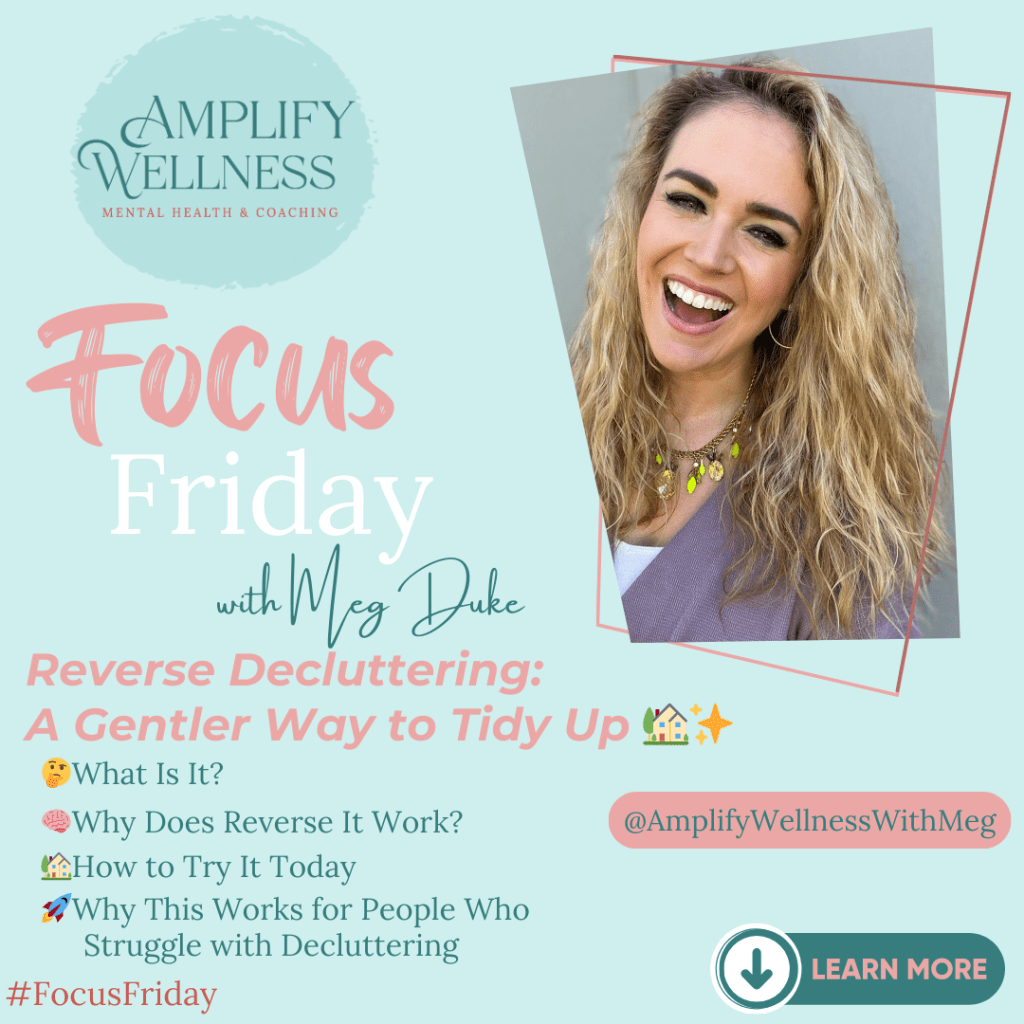
Focus Friday: Reverse Decluttering—A Gentler Way to Tidy Up 🏡✨

Have you ever started decluttering, only to feel paralyzed by decision fatigue? 😵‍💫 Maybe you pulled everything out of a closet, got overwhelmed halfway through, and walked away, leaving an even bigger mess. Or maybe the idea of deciding what to part with feels so daunting that you don’t even start.

If this sounds familiar, reverse decluttering might be the method for you. Instead of focusing on what to get rid of, this approach centers around what you actually want to keep—and for many people, that small shift makes all the difference.

What Is Reverse Decluttering? 🤔

Instead of standing in front of an overflowing drawer wondering what should go, reverse decluttering asks:

💡 What do I actually want to keep?
💡 What items do I use, love, and need?
💡 What things truly add value to my life?

Once you pull out the items that are definite keepers, what’s left is often stuff you don’t really need—making it so much easier to let go of.

Why Does Reverse Decluttering Work? 🧠

For many people (especially those with ADHD or executive function challenges), traditional decluttering is overwhelming because:

🛑 Decision fatigue – Choosing what to get rid of is mentally exhausting.
🛑 Emotional attachment – We feel guilty about getting rid of things.
🛑 Fear of regret – What if we need it later?!
🛑 The “too much, too fast” problem – Pulling everything out at once creates chaos.

Reverse decluttering reduces overwhelm by shifting the focus from loss to intentional selection—you’re not “getting rid of stuff,” you’re curating what you love. 🌟

How to Try Reverse Decluttering Today 🏡

Ready to give it a shot? Here’s how to do it:

1️⃣ Pick a Small, Low-Stress Area

Start with something manageable—a drawer, a shelf, or one section of a closet.

2️⃣ Choose What You LOVE & USE

Take out the essentials—the clothes you actually wear, the books you reread, the kitchen gadgets you use regularly.

3️⃣ Notice What’s Left Over

What’s still sitting there? Do you actually need it? Does it serve a purpose? If not, it’s easier to let go.

4️⃣ Give Yourself Permission to Keep or Let Go

You don’t have to toss everything immediately! A box labeled “Revisit Later” can help if you’re unsure.

5️⃣ Celebrate Small Wins! 🎉

Even if you only declutter one shelf today, that’s progress. Every small step makes a difference!

Why This Works for People Who Struggle with Decluttering 🚀

For those who feel decluttering is out of reach, reverse decluttering makes the process less overwhelming, more intentional, and way more achievable. Instead of asking “What should I remove?”, you’re asking:

💡 What do I truly want to keep?

This method works especially well if you’ve struggled with decluttering before or tend to get stuck in analysis paralysis.

So, if traditional decluttering methods haven’t worked for you, give reverse decluttering a shot this week! Start small, focus on what you truly want in your space, and see how it feels. 🌿

And if focus, organization, and ADHD-friendly strategies are things you want to work on, check out my FREE Navigating ADHD Mini Workbook! It’s packed with helpful tips to get started. 📖✨