How to Work With It (Not Against It)
If you’ve ever found yourself absolutely spinning out over something that seems “small” to others but feels like a deep and urgent moral wrong to you, you might be familiar with the ADHD justice chip.
You might not find this in a diagnostic manual (yet), but many ADHDers report this highly attuned, nearly visceral sensitivity to fairness, injustice, hypocrisy, or unequal treatment. That hyperawareness, sometimes described as “righteous rage,” often stems from a mix of lived experience, executive functioning differences, and emotional intensity.
As someone with ADHD and a Libra rising (hi, that’s me 👋🏼), I sometimes joke that I’m constitutionally wired to spiral when things feel unjust. As a deeply novice astrology learner, I’ve found Libra placements can bring a desire for harmony, equity, and balance.
But when paired with ADHD? Woof.
That deep yearning for fairness can become an internal siren that goes off at full blast. Whether it’s a friend who ghosts us, a team member who doesn’t pull their weight, or an unfair policy at work, it can make collaboration difficult. It can make existing in groups hard. It can make asking for support feel unsafe. It can make letting things go feel nearly impossible.
What the ADHD Justice Chip Might Look Like:
- You notice workplace dynamics that are unfair before anyone else says a word—and it gnaws at you.
- You feel emotionally activated when someone violates unspoken social contracts. e.g., always being late, not pulling their weight, crossing boundaries
- You cannot move on until someone acknowledges a wrongdoing. An apology is necessary, and silence feels like a second offense.
- You find yourself saying “It’s not about the mistake, it’s about the principle of it.”
- You spend time obsessively crafting responses, clarifying your side of the story, or mentally arguing with someone who “got away with it.”
- You feel most regulated when you work alone or are in control of the environment.
Sound familiar? You’re not alone. And you’re also not broken. This part of your ADHD brain is trying to make sense of a world that often feels nonsensical.
But Here’s the Hard Part: Justice Chips Don’t Always Make You Easy to Work With.
It can be hard to say that out loud, but it’s true. Sometimes our justice chip activates before we have the full story. Sometimes it comes from a place of unhealed burnout, rejection sensitivity, or dysregulation. Sometimes, it can create more distance in the relationships we actually want to protect.
And, this is important, it’s a place of privilege to be able to work alone and avoid these dynamics altogether. Many people with ADHD are navigating interpersonal systems that aren’t built for their neurotype: teams, families, jobs, school environments. We don’t always get to opt out.
So how do we work with this knowledge instead of letting it rule us?
How to Coexist With Your ADHD Justice Chip
🌀 Name It in Real Time.
Say it aloud or internally: “My justice chip is activated.” That alone can lower the emotional intensity and help separate your reaction from your response.
🧩 Look for the Root.
Is this about what just happened or about past patterns of being dismissed, ignored, or overpowered? When we name the history, we give ourselves more options in the present.
📊 Assess the Stakes.
Ask: Is this truly unjust, or is it annoying? Some things are deeply unfair and worth pushing against. But not every irritation is a systemic issue. Being able to discern the difference helps protect your energy.
🤝 Practice Nuanced Communication.
Not everyone operates with your level of moral radar. It’s not always malice. It might be neurotypical autopilot or differing values. Communicating with curiosity instead of accusation opens more doors.
💡 Create Systems, Not Grudges.
If you work with others, co-create agreements or shared norms. If you know a certain behavior activates your chip, find ways to build in boundaries or buffers before resentment piles up.
🌬 Release the Obsession With “Fair.”
This is hard. Really hard. But part of the work is recognizing that life isn’t always fair, and your peace can’t be conditional on others behaving “correctly.” You can value fairness and seek internal balance.
Your justice chip is not the enemy. It’s a part of your brain that is deeply sensitive to equity, attuned to ethics, and wired to protect the vulnerable, including yourself. But when it runs the show without insight or context, it can lead to isolation, burnout, or ruptured relationships.
So this Focus Friday, I invite you to get curious:
Where does your justice chip show up?
What does it need to feel soothed, not just seen?
And how might you build a life that honors both your values and your nervous system? 🧠💛
🌟 Want more practical support for your neurospicy brain?
Download my Free Navigating ADHD Mini Workbook! It’s a short and sweet guide to help you build awareness, shift self-talk, and show up for yourself without judgment.






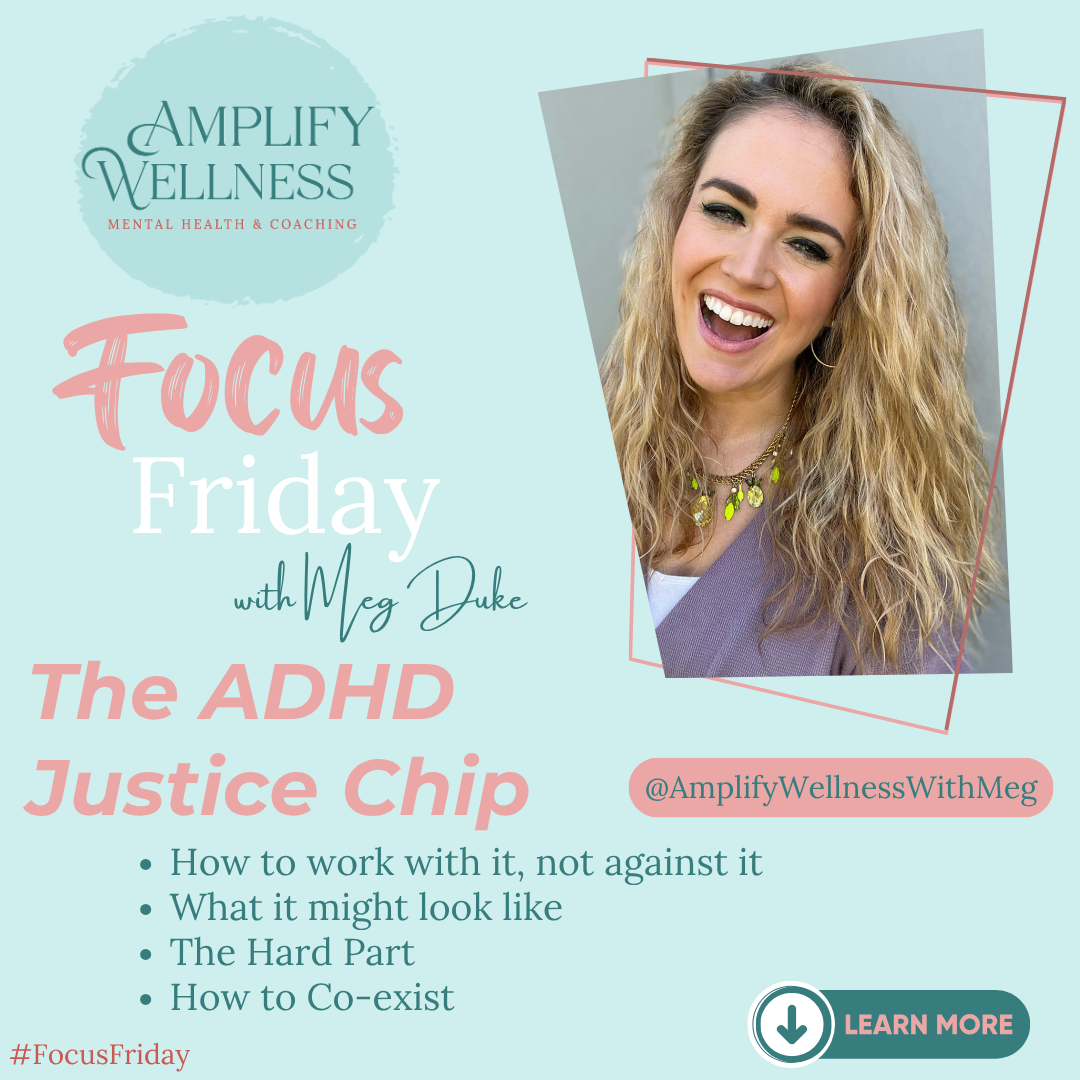




 Amplify Wellness with Meg Duke